Knowledge · Restorno
Knowledge center
What we have learned in 25 years in the workshop, written in plain language: how to care for a piece, what it is made of, and what the words mean.
From the workshop
This is where knowledge meets the material: careful disassembly, frame repair, and rebuilding the upholstery layers. The photographs are real and record Restorno’s work.
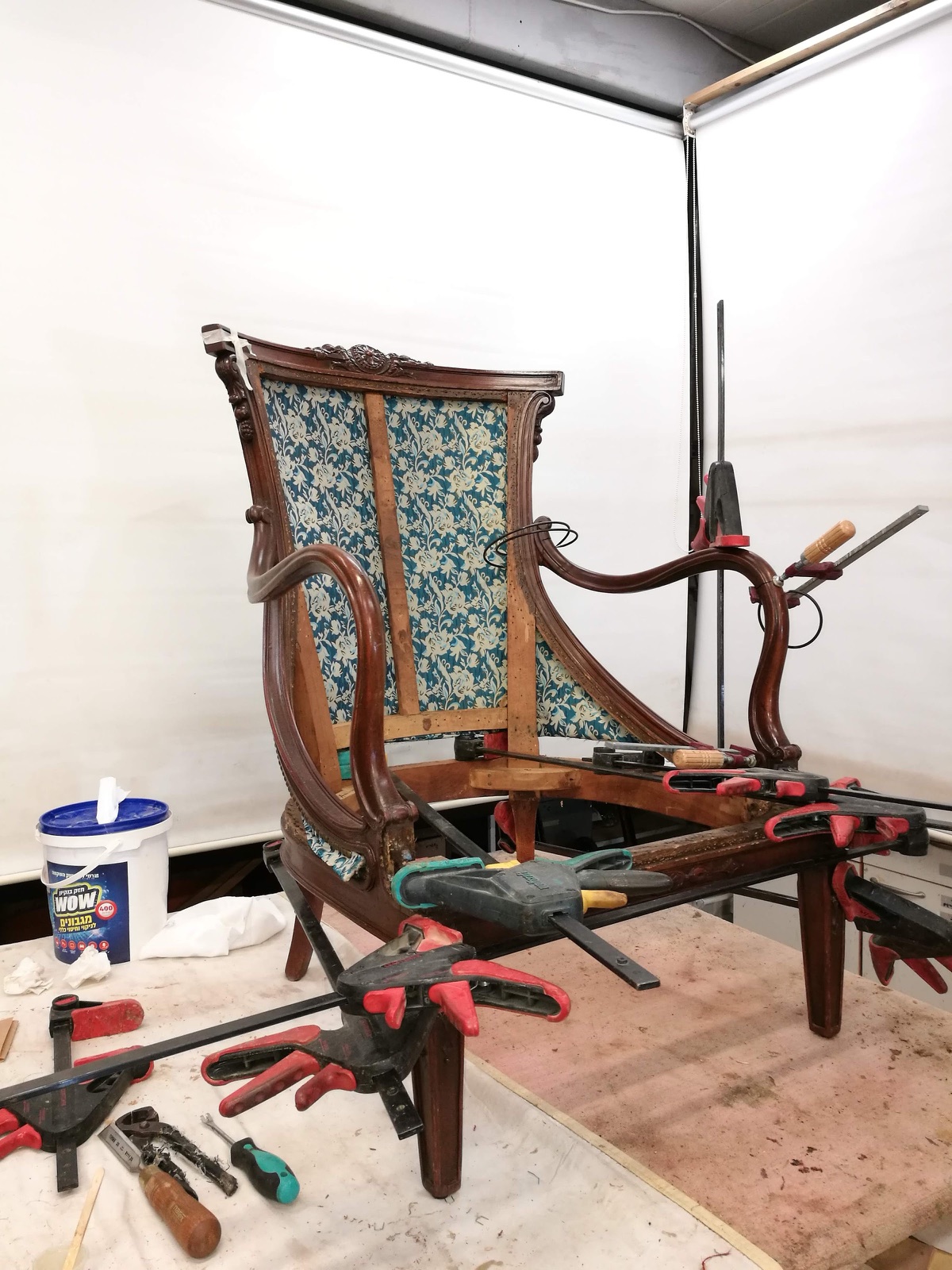
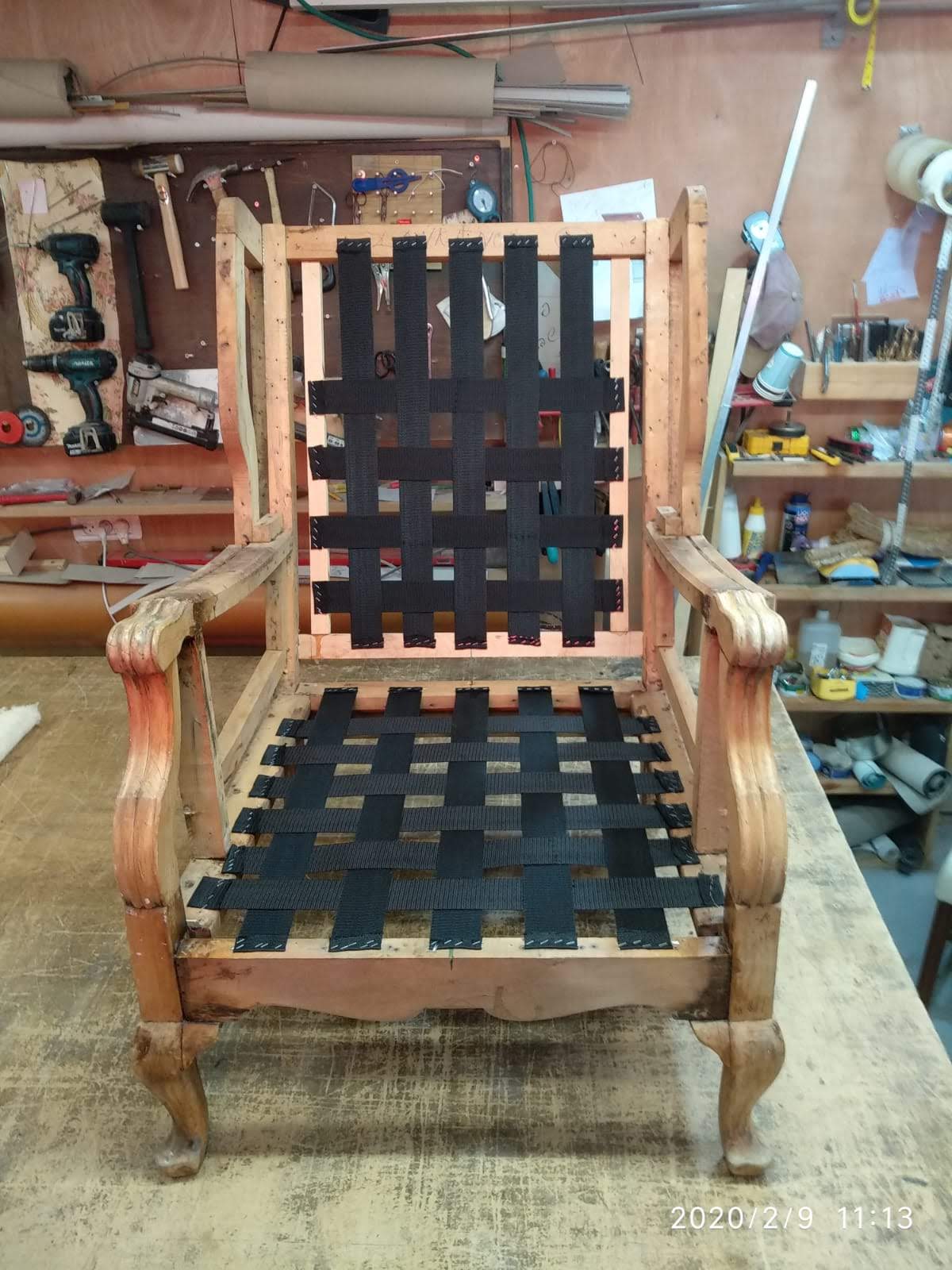
Structural repair of a carved armchair
When the joints have weakened, upholstery is not the first answer. The armchair was held in many clamps so the parts of the frame could be brought back into place and the skeleton stabilized before the work continued.
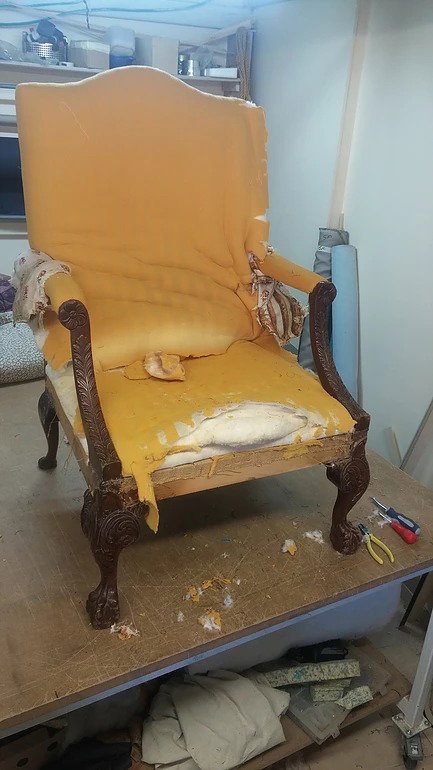
Reupholstery of a carved armchair
A record from the workshop: stripping the old upholstery layers, checking the foundation, building up the filling, and covering it again — without hiding the carved wood.
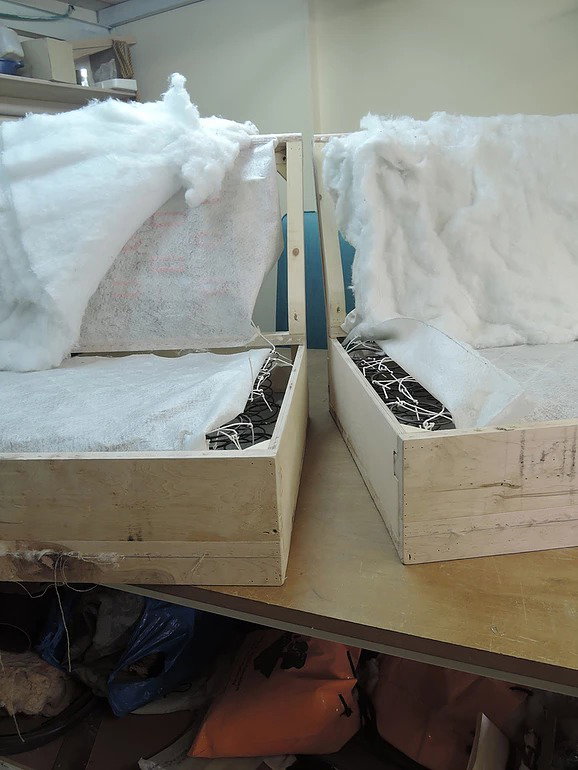
Splitting a large sofa into two units
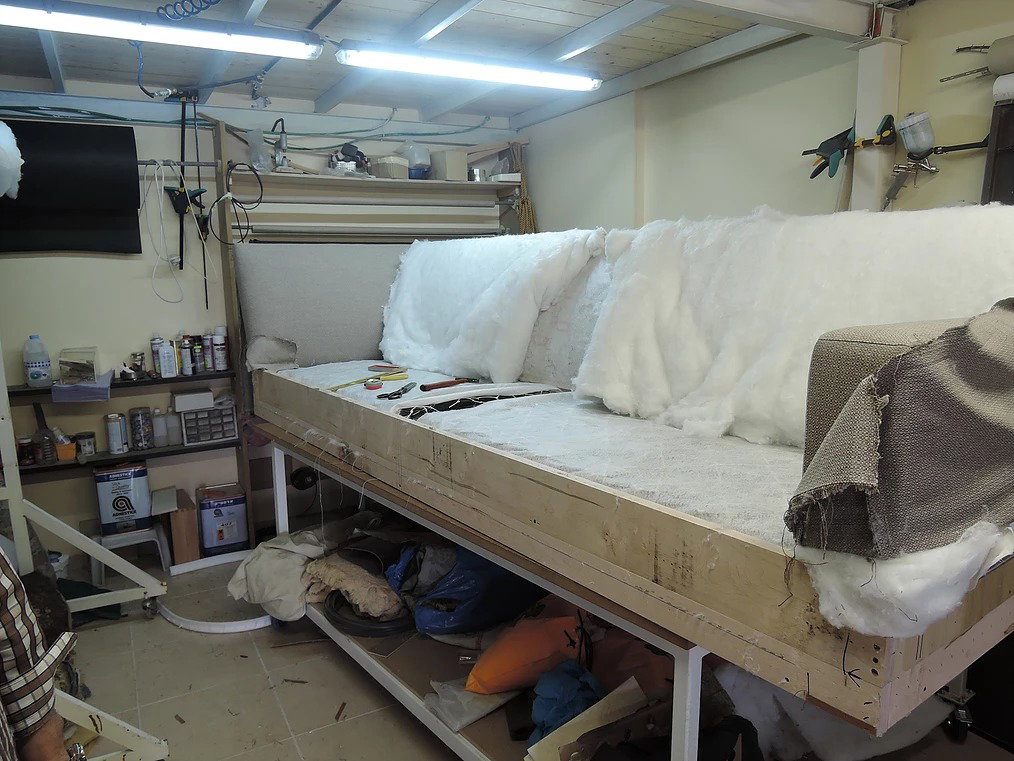
A structural solution for a large sofa: opening the upholstery, dividing the frame into two units, and reinforcing and rebuilding them so the parts can be joined and still read as one sofa.
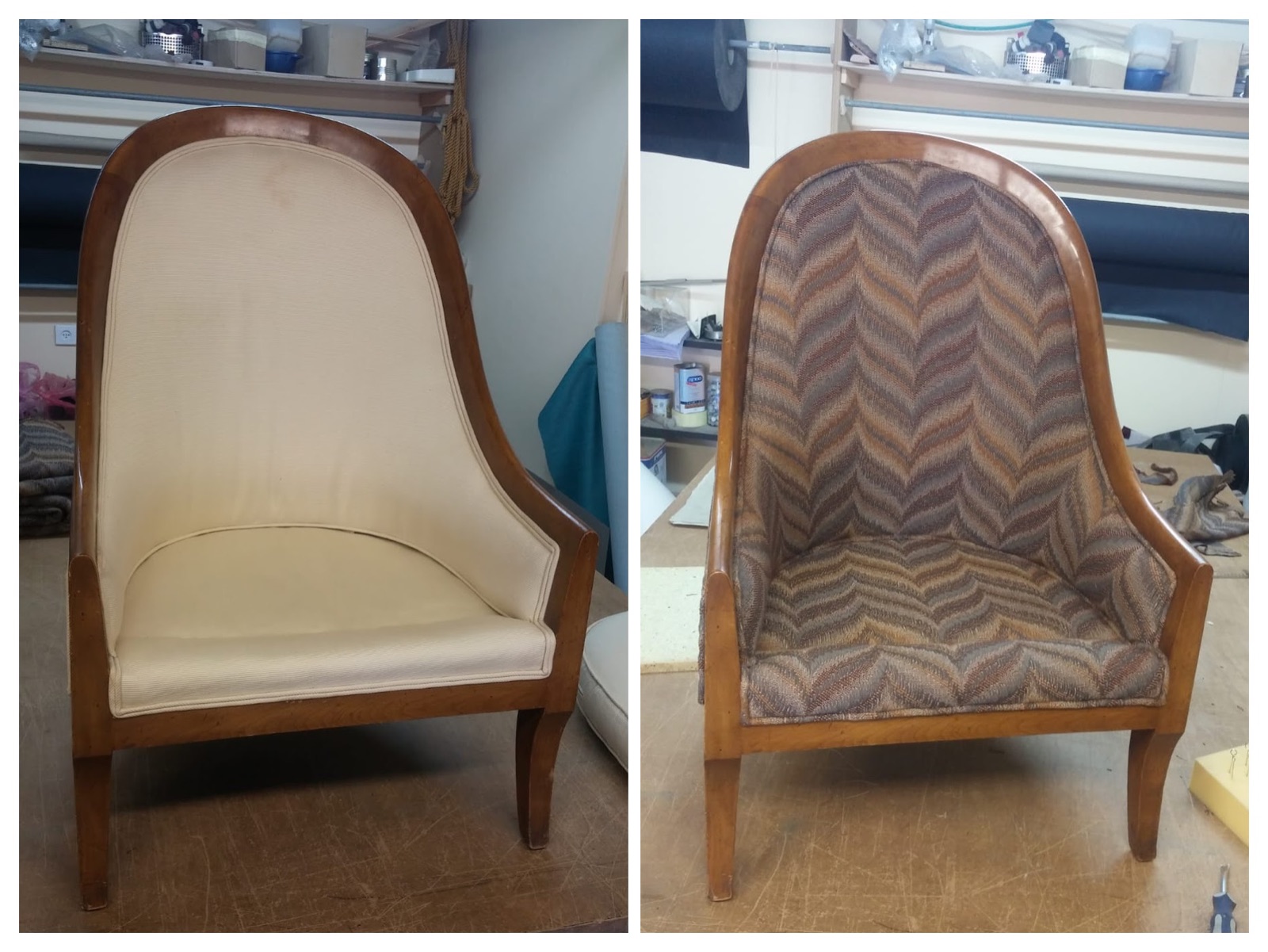
The same form, a new character: changes of upholstery
Four comparisons from the workshop show how the choice of cloth, color, and pattern can change the presence of an armchair — while the lines and proportions of the frame stay.
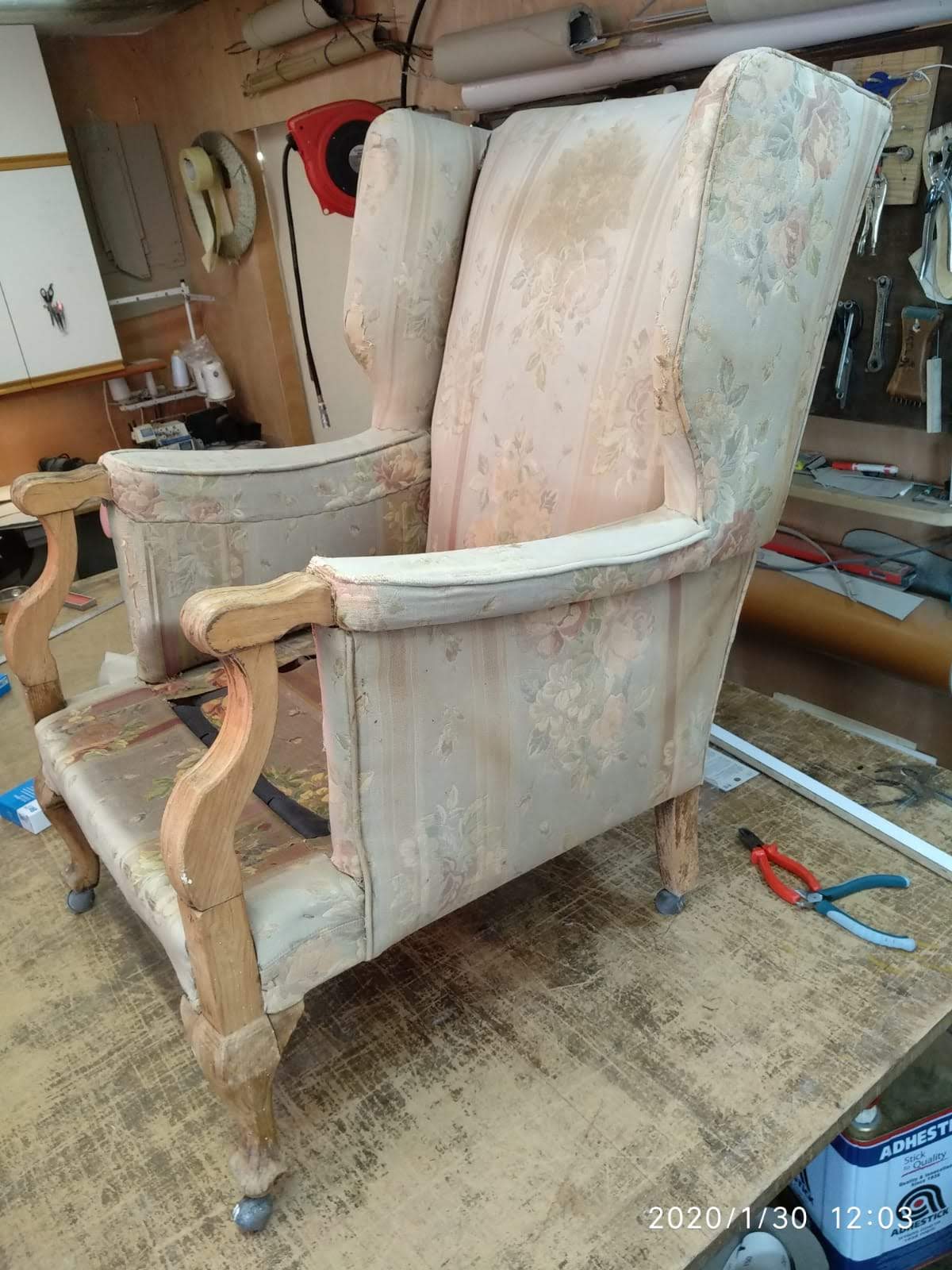
From the frame to the cloth: rebuilding a wingback
An old wingback was stripped to the frame, given a new support foundation and upholstery layers built again, and finally covered in a deep-toned cloth with light piping.
Cleaning an antique finish properly
Do not use household cleaners or commercial furniture spray — silicone and solvents damage shellac and an original finish. Dust with a dry microfiber cloth, and only occasionally with a cloth that is barely damp. To refresh the sheen: a thin coat of natural wax (beeswax or carnauba) once or twice a year, in gentle circles.
Humidity and temperature — the quiet enemy
Antique wood “breathes” and responds to changes in humidity. The Israeli climate poses a double risk: a dry summer that shrinks and splits, and a damp winter that swells drawers and joints. Keep relative humidity at 45%–55%, keep furniture out of a direct air-conditioner blast and away from a window in strong sun, and avoid placing it against a damp exterior wall.
Identifying your wood
Antique furniture in Israel is often oak, walnut, mahogany, beech, or a wood faced with veneer. A hardwood (oak, walnut) is more durable and takes restoration well; a softwood and veneer need a lighter hand. A quick sign: heavy weight and tight grain point to a hardwood. Do not sand hard before you know what it is — thin veneer can be sanded away entirely.
Lifting veneer — what to do
A bubble or a lifted corner of veneer comes from moisture or from glue that has dried out. Do not tear it and do not cut it off. Keep the piece that has lifted, keep it away from moisture, and photograph it. Veneer repair needs glue introduced carefully and controlled pressure — delicate work best left to a craftsperson.
Loose joints in chairs and tables
A wobbling chair is the most common failure. Do not fill the joint with epoxy or nails — that makes a future repair impossible. The right repair is to take the joint apart, clean out the old glue (usually reversible hide glue), and glue it again with a suitable woodworking glue. If the chair is in daily use, stop using it until it is repaired, so the break does not spread.
White water rings on a table
A white ring is moisture trapped in the finish (not in the wood itself) — so it is usually reversible. Do not scrape it. Gentle methods, such as mild heat through a cloth or a specialist wax, can draw the moisture out. A dark stain, by contrast, has already reached the wood and needs professional treatment.
Compare the living tree, the end grain, and the figure. Color alone is not enough to identify a wood: finish, light, and age all change it, and a clean cut under a hand lens is sometimes required.
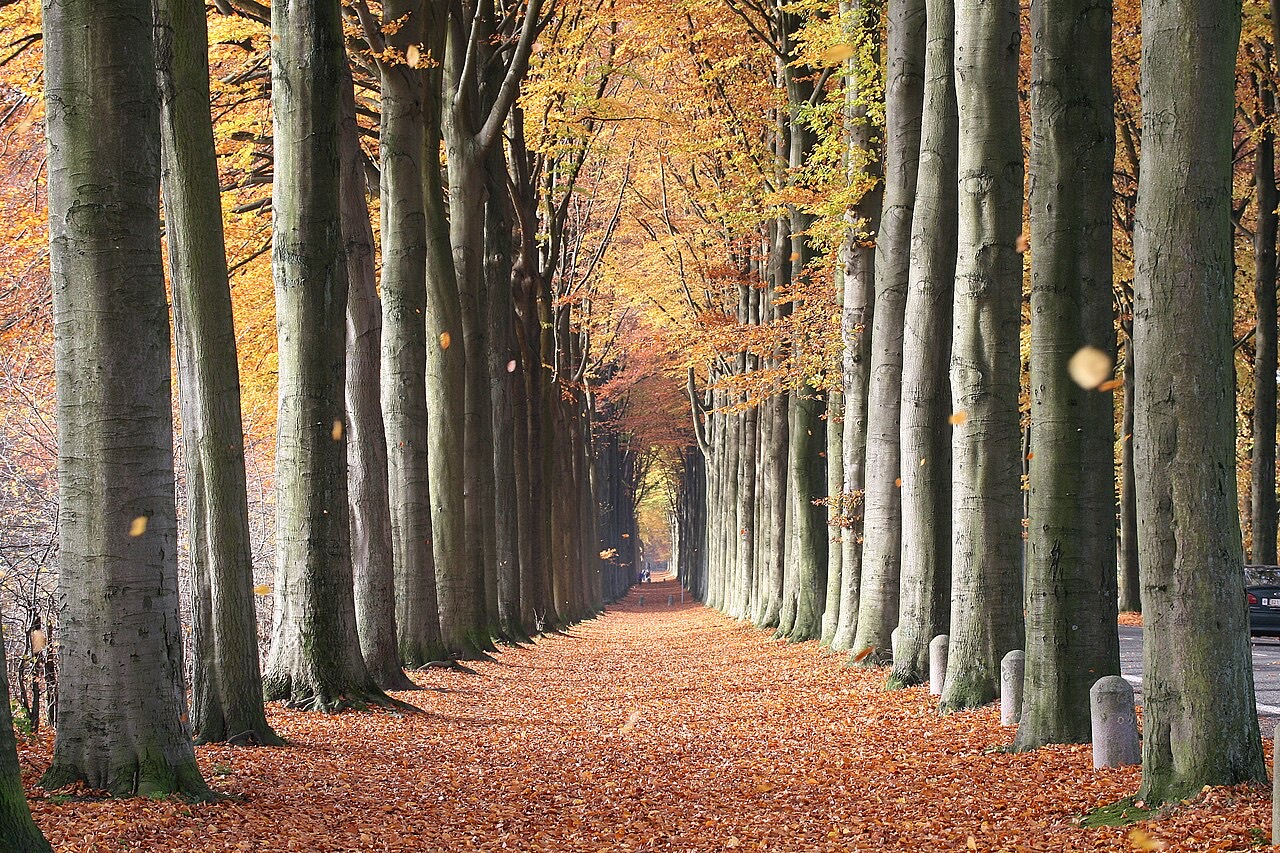
European beech
A pale, hard, even wood that excels at steam bending. Very common in chairs, bent parts, frames, and European working furniture.
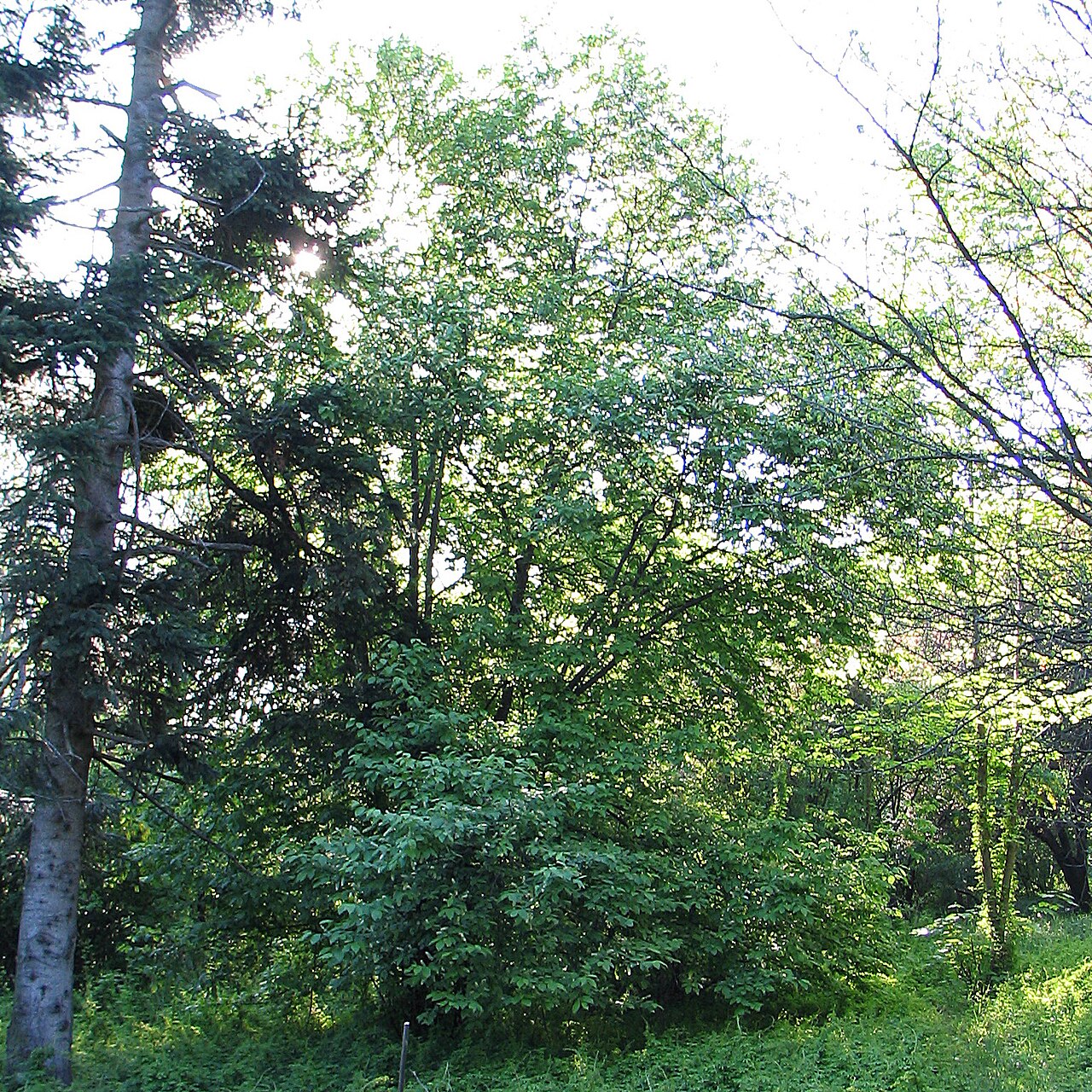
American black cherry
A fine furniture wood that begins pinkish brown and darkens with light and time. Valued for its smooth surface, calm grain, and warm luster.
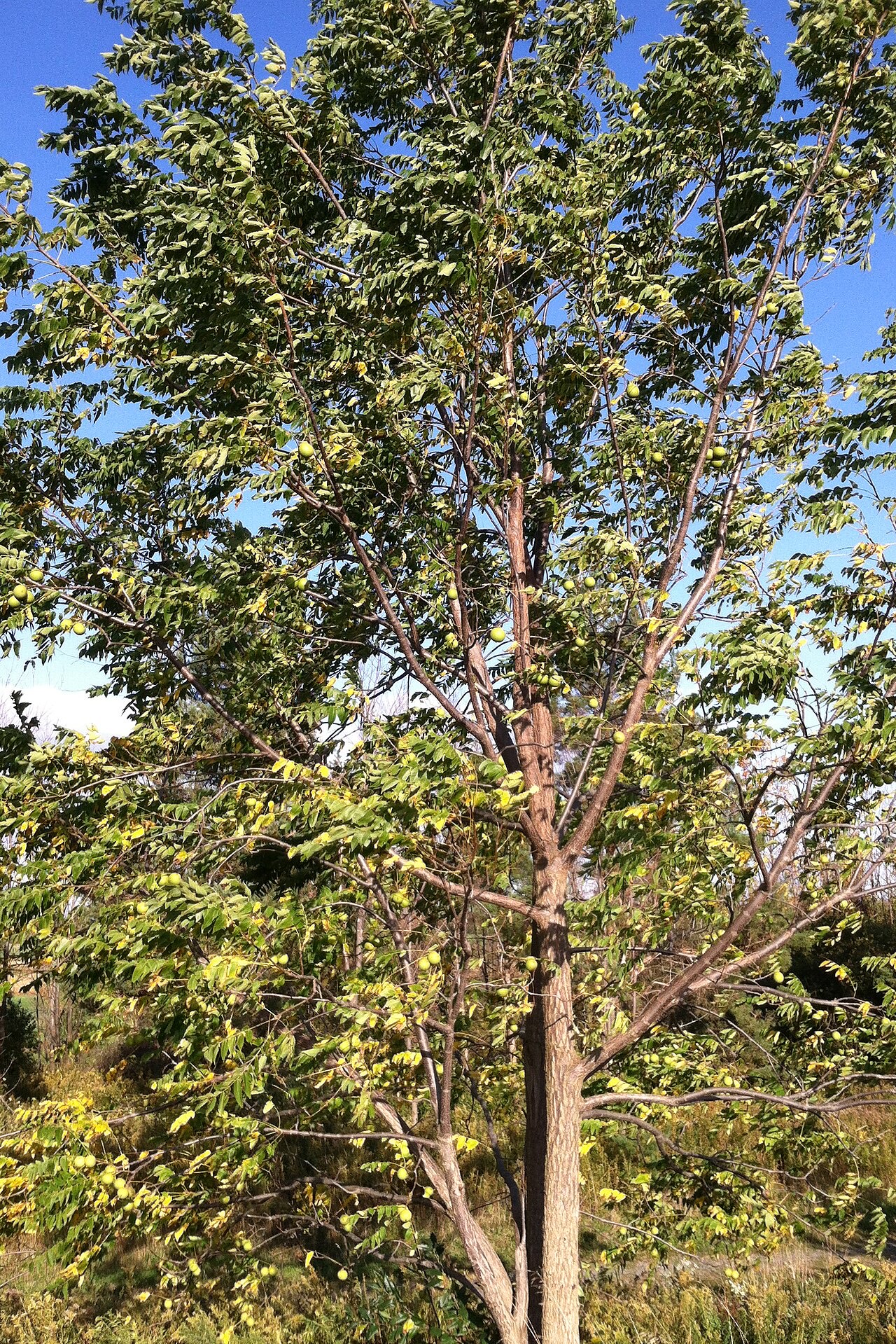
American black walnut
A dark, even chocolate-brown wood, medium-hard and stable — the classic American cabinet wood, and the wood of mid-century modern furniture.
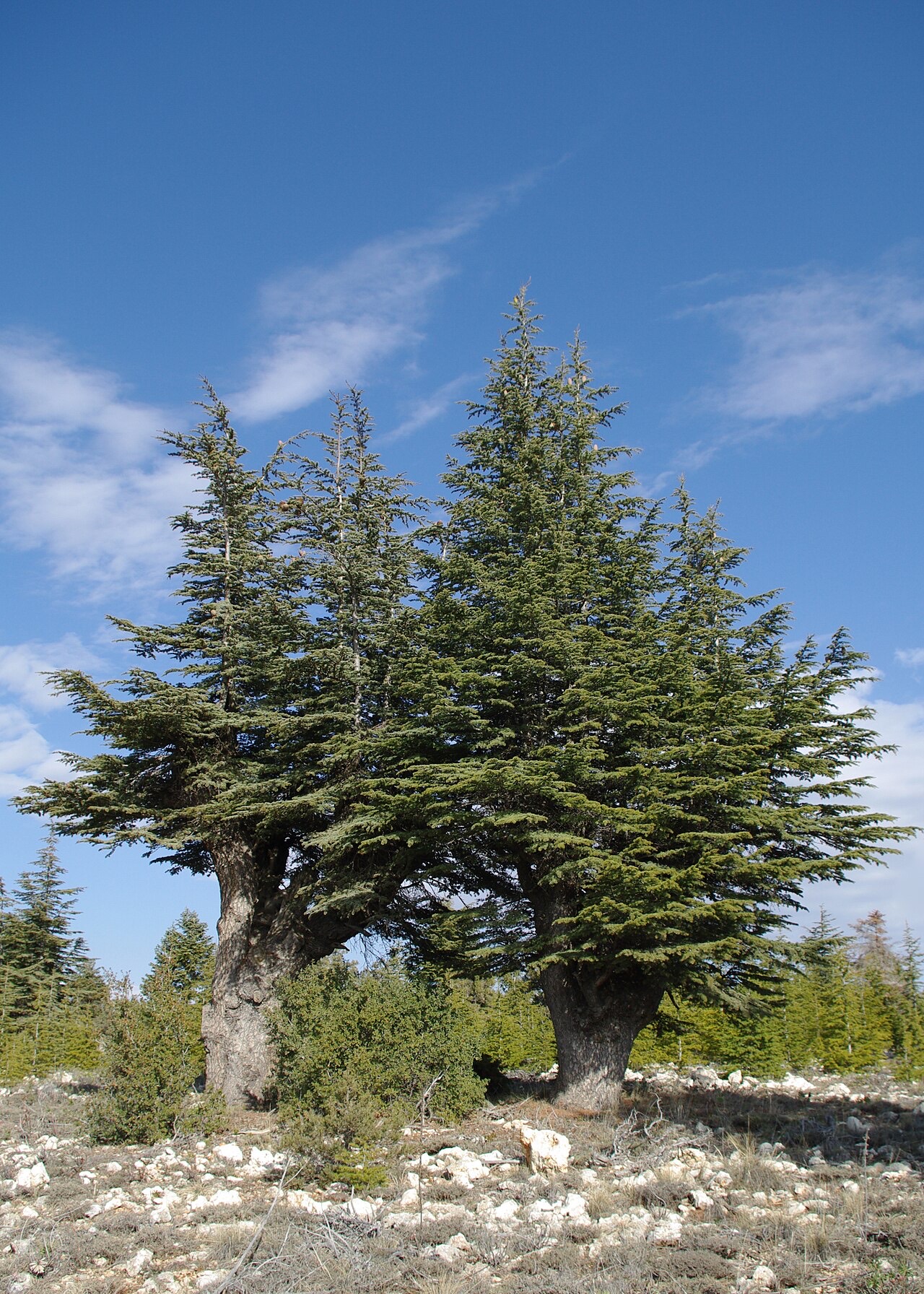
Cedar
A fragrant softwood, relatively light and resistant to decay and insects — the wood of wardrobes and chests in the Middle East and the Mediterranean, and the timber of the Temple in Jerusalem.
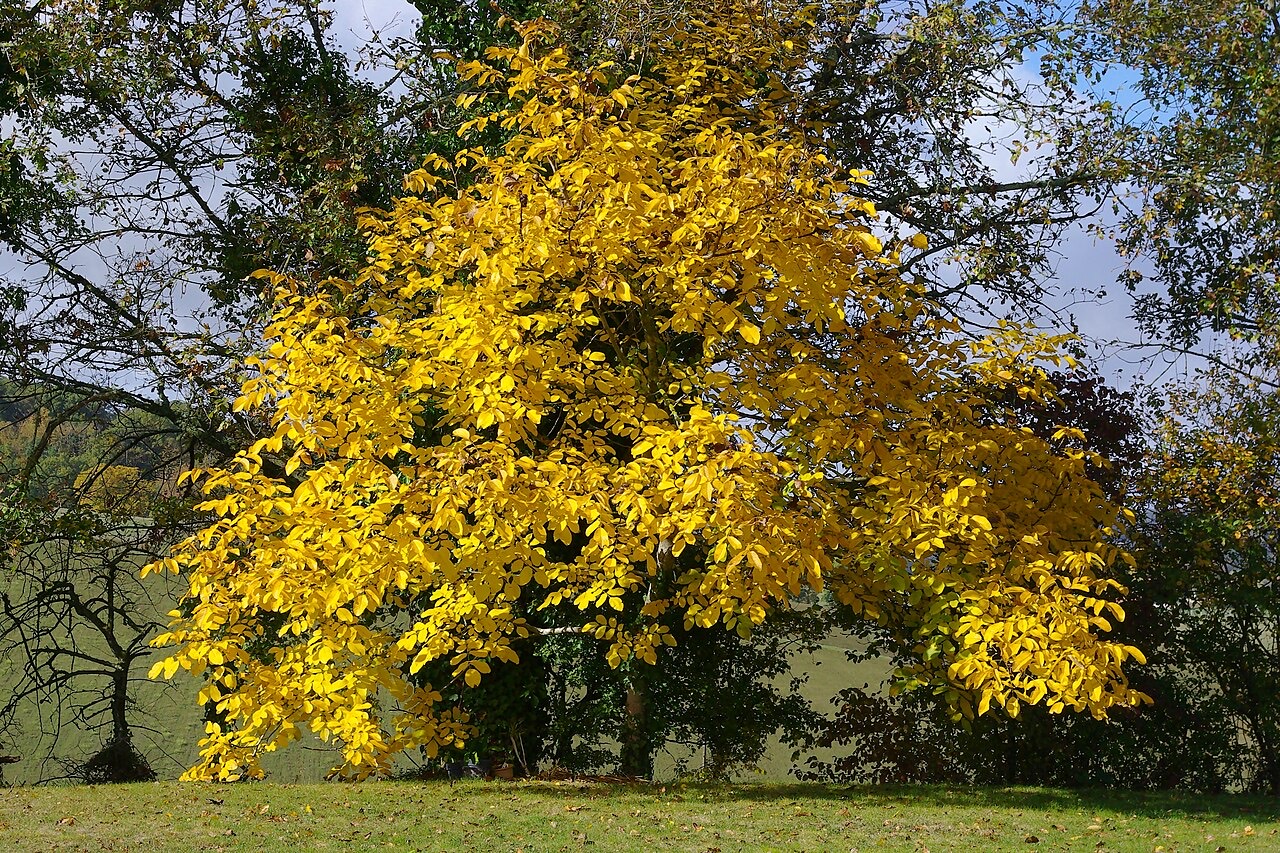
European walnut
A classic cabinet wood in varying browns, with a fine grain and wavy or curly figure. Walnut appears as solid wood, as veneer, and in marquetry.
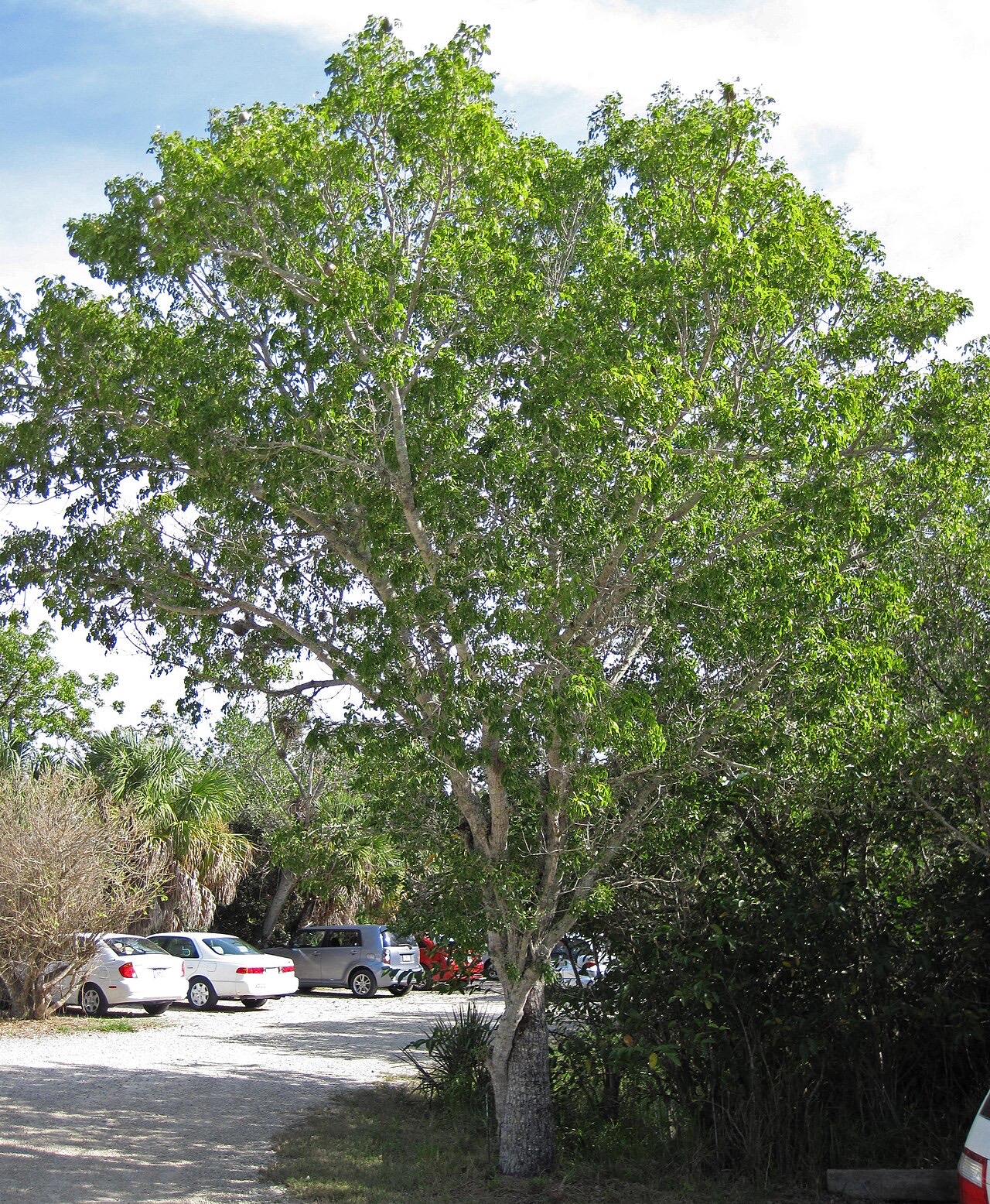
True mahogany
A family of tropical cabinet woods in a reddish brown, with good stability and excellent carving and polishing. The trade name “mahogany” is also used for other woods, so it calls for caution.
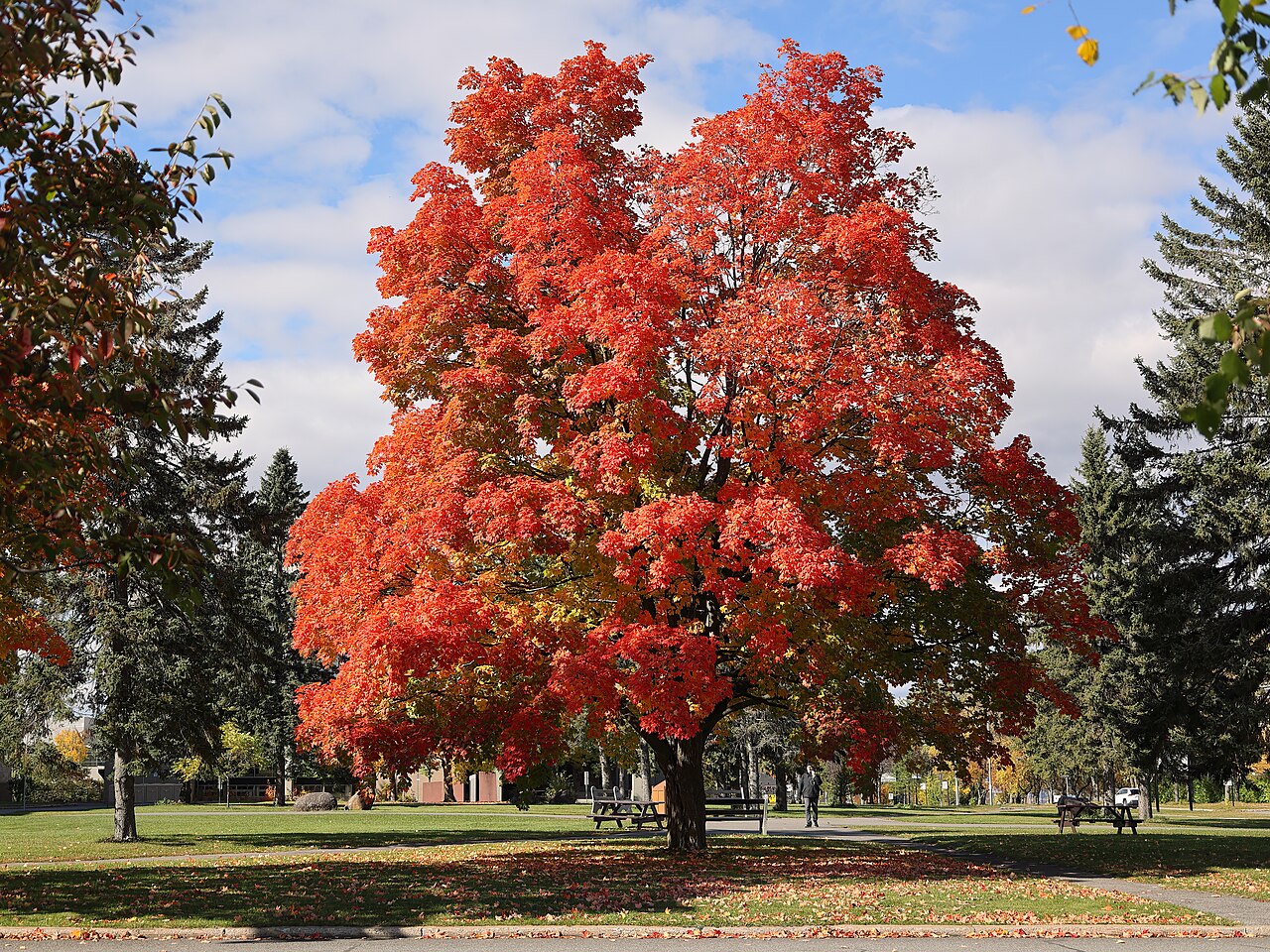
Hard maple
A dense, pale wood with a fine texture, used in fine furniture and sometimes showing curly, wavy, or bird’s-eye figure.
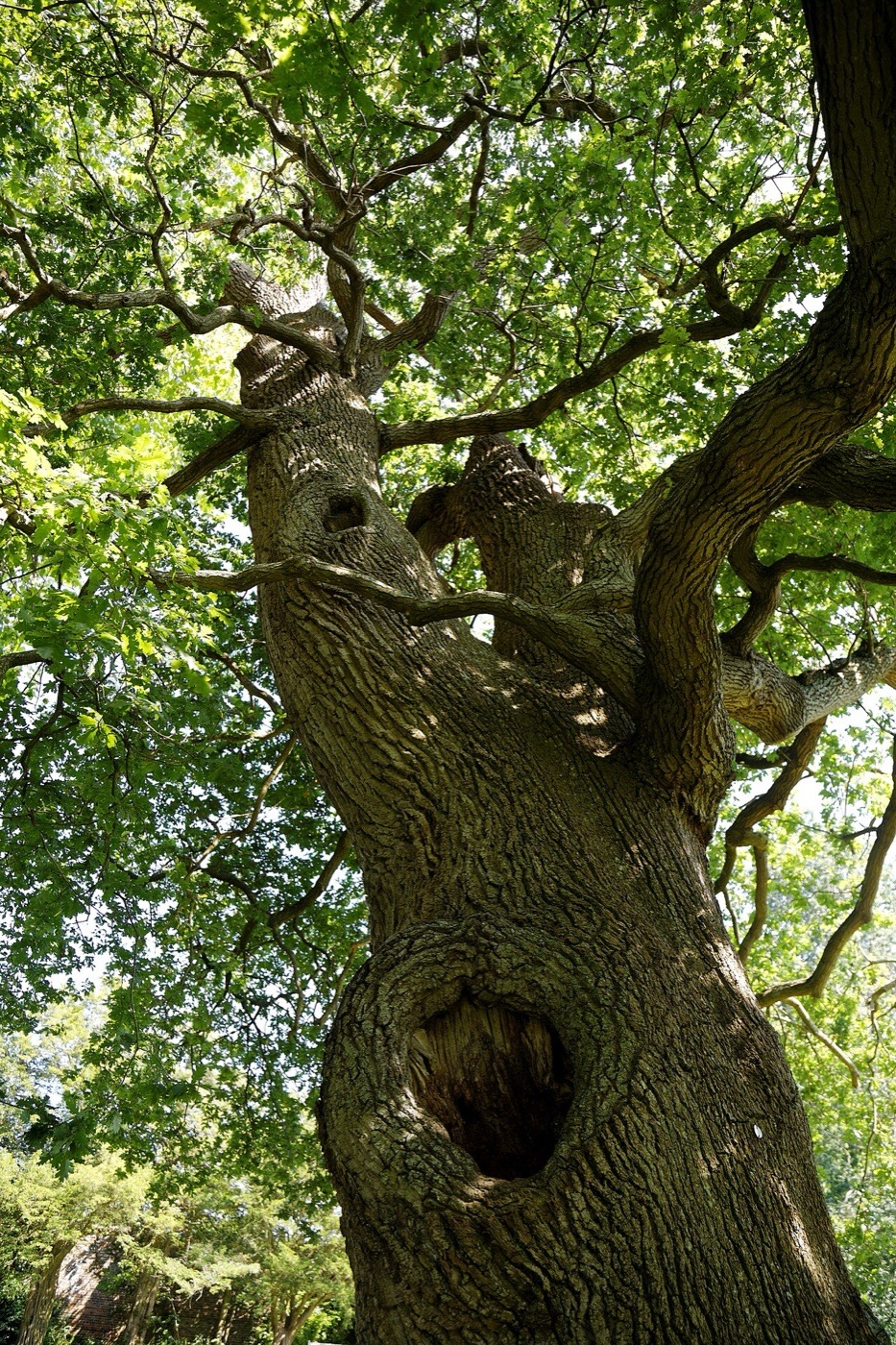
Oak
A hard, heavy wood with large pores and prominent rays. Oak is one of the most important woods in antique European furniture, for its strength, its durability, and its rich appearance.
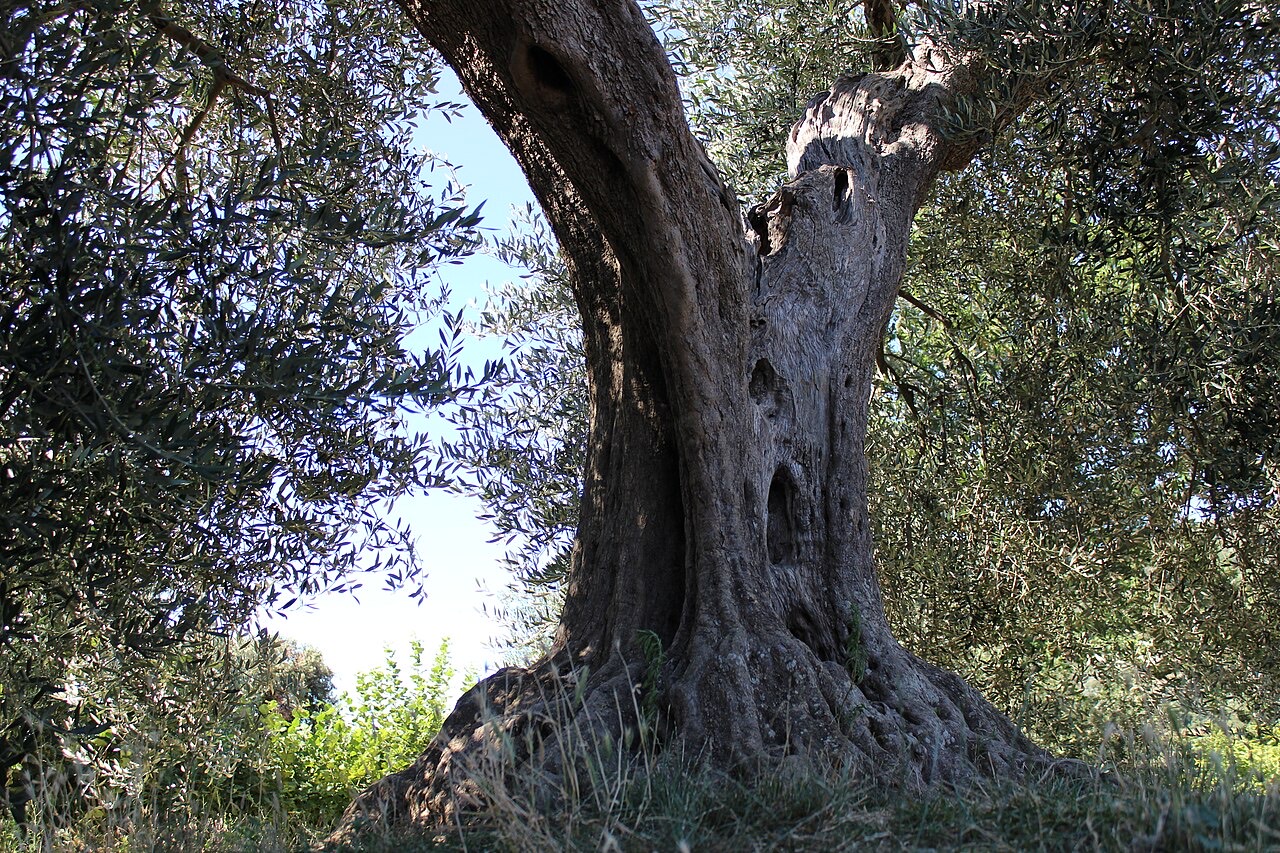
Olive
A hard, dense, oily wood with twisted grain and dramatic dark-brown streaks — the most local wood in Israel, and in furniture used for veneer, small objects, and special pieces, not for mass production.

Rosewood (palisander)
A heavy, expensive tropical wood, purplish brown with black streaks and a rose scent when worked — the veneer wood of Regency furniture, Art Deco, and Danish design of the 1960s. All Dalbergia species are protected under CITES.
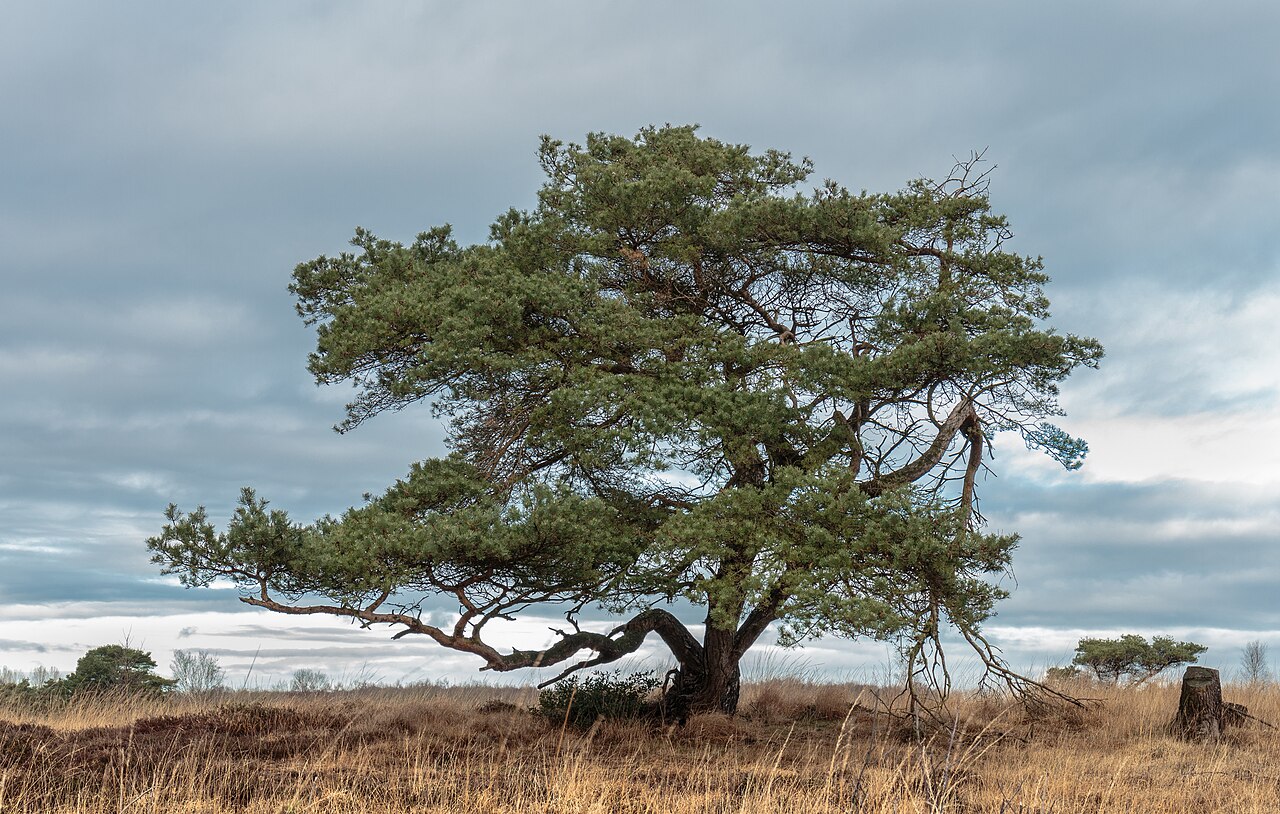
Scots pine
A relatively light softwood, with clear rings and knots. Common as a structural wood, in backs, in drawers, and under veneer in European furniture.
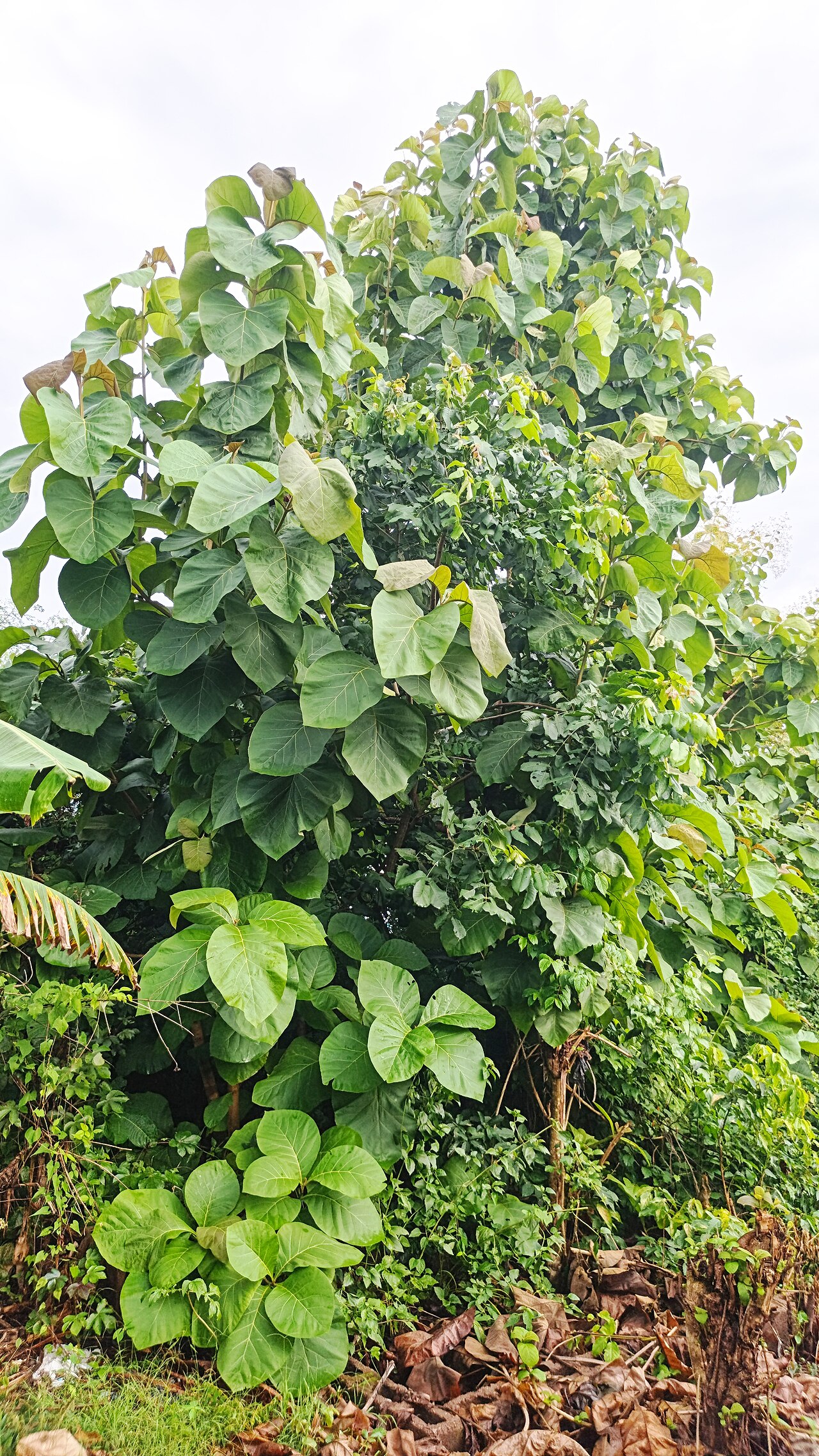
Teak
A golden-brown tropical wood, oily and naturally durable. Associated with fine furniture, outdoor furniture, and Scandinavian and mid-20th-century design.
Carving
Shaping wood in three dimensions with chisels and a mallet, removing material gradually — used for ornament on legs, frames, and decorative details of period furniture.
Dovetail joint
A joint between two boards cut as interlocking triangular tails — one of the strongest and most recognizable joints in drawer and box construction.
French polish
An old finishing technique that uses shellac dissolved in alcohol, laid on in many very thin coats with a cloth pad, to build the deep, “wet” gloss associated with antique furniture.
Gilding
Covering a wooden surface with a thin layer of gold leaf over a ground of gesso and bole, either in oil gilding (more durable) or water gilding (burnishable) — common on mirror frames and court furniture.
Marquetry
Gluing pieces of veneer in different colors and textures into a pattern or a picture on a flat surface — a decorative woodworking technique that reached a peak in Paris in the 17th and 18th centuries.
Steam bending
Bending solid wood by softening the fibers in steam, then bending it on a form until it cools and holds the shape — a traditional way to make curved parts without cutting across the grain.
Stripping an old finish
Removing an old finish — shellac, varnish, or paint — before a piece is refinished. The method (solvent, scraping, or both) depends on the finish, the condition of the wood, and whether the original patina should stay.
Hand-tied springs
A traditional upholstery method in which coil springs are tied by hand with twine in eight directions to webbing or a web, so the load is shared and an old seat stays resilient.
Veneering
Gluing a thin layer of precious wood (veneer) onto a cheaper or more stable ground — it gives the look of an exotic wood at a lower cost, and often more structural stability than solid wood.
Patina
The layer of wear and sheen that wood gathers over the years. To collectors it is an asset, not a flaw: original patina raises value, and removing it can damage that value badly.
Veneer
A thin layer of fine wood glued onto a body of plainer wood. A legitimate technique, centuries old — many grand mahogany pieces are built this way.
Solid wood
A part made entirely of the same wood, with no facing. Not necessarily “better” than veneer — but you need to know which one is in front of you.
French polish
A traditional finish of natural resin, laid on in dozens of thin coats with a cloth pad. It gives a depth and glow that modern lacquers do not — and it is the right finish for most antiques.
Marquetry
Pictures and patterns made from pieces of veneer in different tones, assembled like a puzzle across the surface of the furniture.
Intarsia
Inlaying pieces of wood into a solid-wood surface — set into the thickness, not applied as a facing. An older technique, and a more expensive one than marquetry.
Frequently asked questions
- How do you know whether a piece is worth restoring?
- Send us a photograph through the valuation in the app or on WhatsApp. Nati looks at the wood, the condition of the joints and the finish, and the emotional and monetary value — and gives an honest assessment. Sometimes it is worth it; sometimes it is better to conserve the piece as it is.
- How much does restoration cost?
- There is no flat price — it depends on the extent of the damage, the wood, and the finish you want. We give a proper quote after we have seen the piece (photographs and sometimes a physical inspection), before any work begins. No surprises.
- How long does restoration take?
- A small repair takes a few days. A full restoration of an antique, including stabilizing, wood repairs, and refinishing, takes several weeks. Wood needs time to acclimate and to dry between stages; rushing harms the result. You will get a realistic schedule up front.
- Do you collect the furniture and bring it back?
- Yes. We have a logistics arrangement for collecting and returning furniture, including heavy and delicate pieces. We will set a time with you and pack it safely.
- Will the restoration harm the originality and the value?
- No. We work with a conservation approach: we keep as much of the original material as we can, use reversible materials, and document every stage. Proper professional restoration preserves a piece and can raise its value.
- How do we start?
- The simplest way is to open a restoration case in the app and send a photograph of the piece, or write to Nati on WhatsApp. From there it unfolds: an assessment, a quote, and if you approve, the work begins, with updates in the chat.
Have a piece of furniture and you are not sure what you are looking at?
A few photographs and a short description — and we will get to know your piece. No obligation.
Send photos for a restoration assessment