Knowledge center · Woods in antique furniture · Rosewood (palisander)
Wood · Dalbergia nigra (ריו/ברזילאי), D. latifolia (הודי), D. sissoo (שישם)
Rosewood (palisander)
A heavy, expensive tropical wood, purplish brown with black streaks and a rose scent when worked — the veneer wood of Regency furniture, Art Deco, and Danish design of the 1960s. All Dalbergia species are protected under CITES.
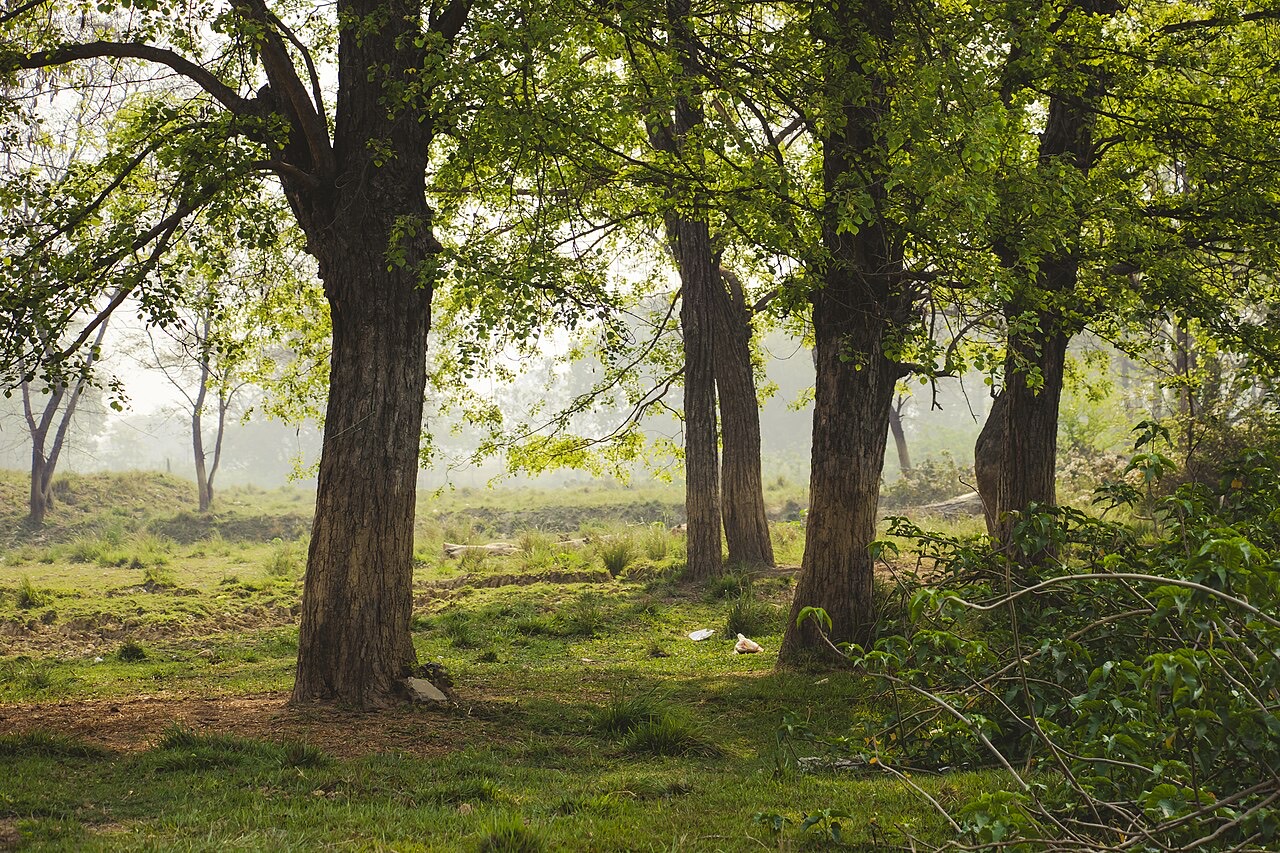

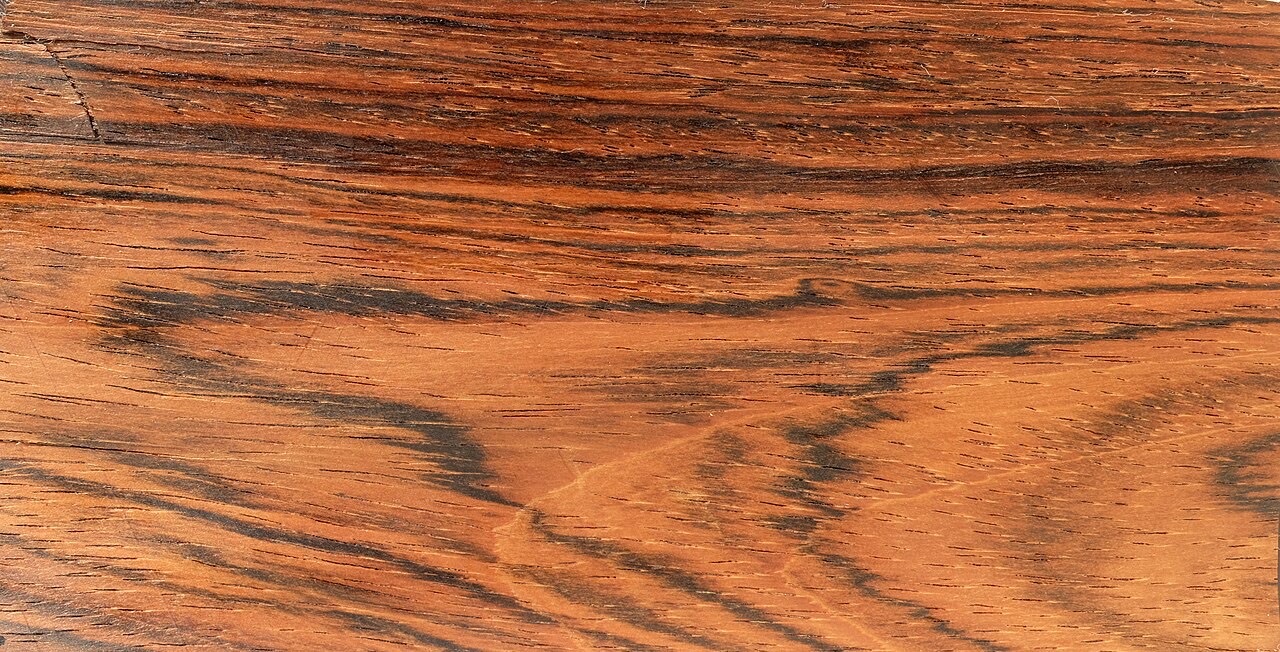

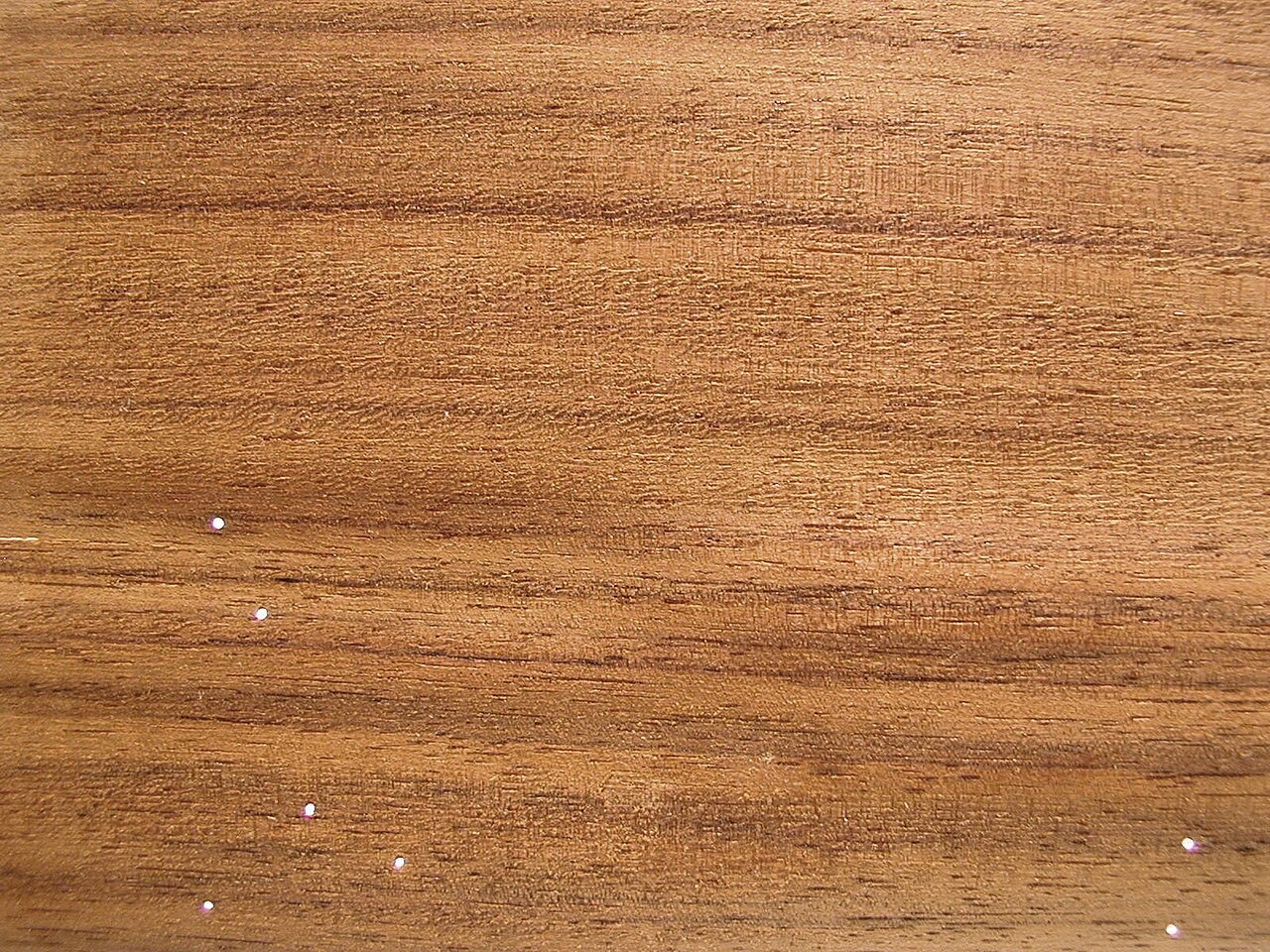

“Palisander” (from German and Portuguese) and “rosewood” are the same thing: trees of the genus Dalbergia. The most expensive and famous is Brazilian rosewood (D. nigra), from Brazil, banned from trade entirely since 1992. After it come Indian rosewood (D. latifolia) and sissoo (D. sissoo) from India and Pakistan, common in imported Indian furniture. The “rosewoods” of Honduras, Madagascar, and Africa are further species, all of them under CITES today.
Identification. A color from reddish brown to purple-chocolate, with bold, irregular black streaks; very heavy (some species sink in water); medium to large pores; a sweet, floral scent when sawn — the source of the name. Rio tends toward dramatic “landscape” figure; the Indian wood is more even and more purple.
Working and restoration. Hard to work by hand and it dulls tools, but it polishes to a glassy luster. The natural oils interfere with gluing — a surface to be glued has to be fresh and clean. In furniture it is almost always veneer (the wood is too expensive for solid), so the common repair is lifting veneer and bubbles. Important: there is almost no legal source of new Brazilian rosewood for a repair — old recycled veneer or a related species is used, and the choice is documented.
Historical background
Brazilian rosewood reached Europe from Brazil in the 17th century and became the luxury veneer wood of English Regency furniture (1800–1830), of French Empire, and of the Art Deco of the 1920s and 1930s. In the 1950s and 1960s it became the defining material of Danish and Brazilian design (Verner, Juhl, and Sergio Rodrigues). Overcutting brought a total ban on Brazilian rosewood in 1992 (CITES Appendix I), and since 2017 every Dalbergia species is protected — including in musical instruments and in new furniture.
Related
Veneering
Gluing a thin layer of precious wood (veneer) onto a cheaper or more stable ground — it gives the look of an exotic wood at a lower cost, and often more structural stability than solid wood.
French polish
An old finishing technique that uses shellac dissolved in alcohol, laid on in many very thin coats with a cloth pad, to build the deep, “wet” gloss associated with antique furniture.
Lifting veneer — what to do
A bubble or a lifted corner of veneer comes from moisture or from glue that has dried out. Do not tear it and do not cut it off. Keep the piece that has lifted, keep it away from moisture, and photograph it. Veneer repair needs glue introduced carefully and controlled pressure — delicate work best left to a craftsperson.
Veneer
A thin layer of fine wood glued onto a body of plainer wood. A legitimate technique, centuries old — many grand mahogany pieces are built this way.
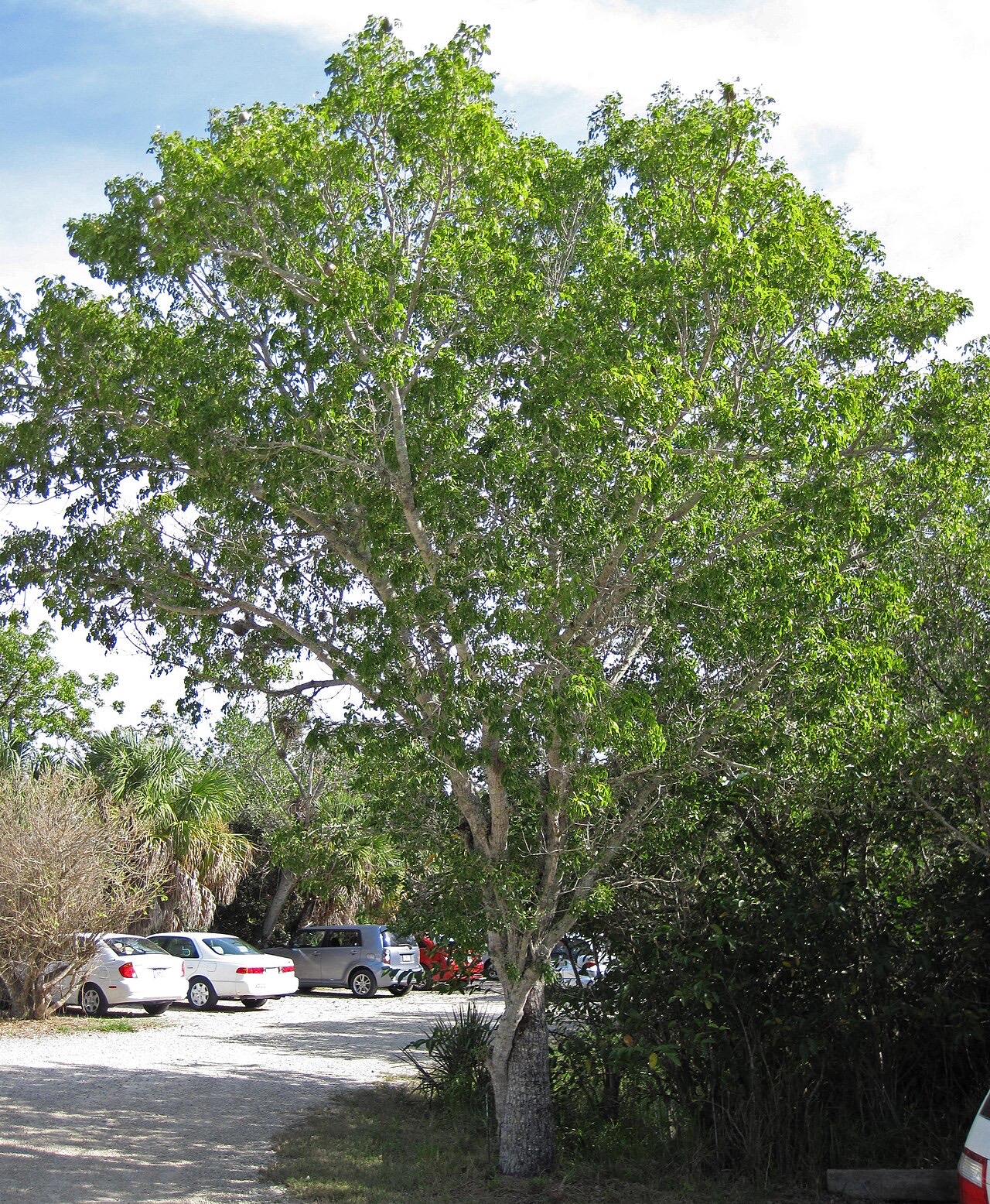
True mahogany
A family of tropical cabinet woods in a reddish brown, with good stability and excellent carving and polishing. The trade name “mahogany” is also used for other woods, so it calls for caution.
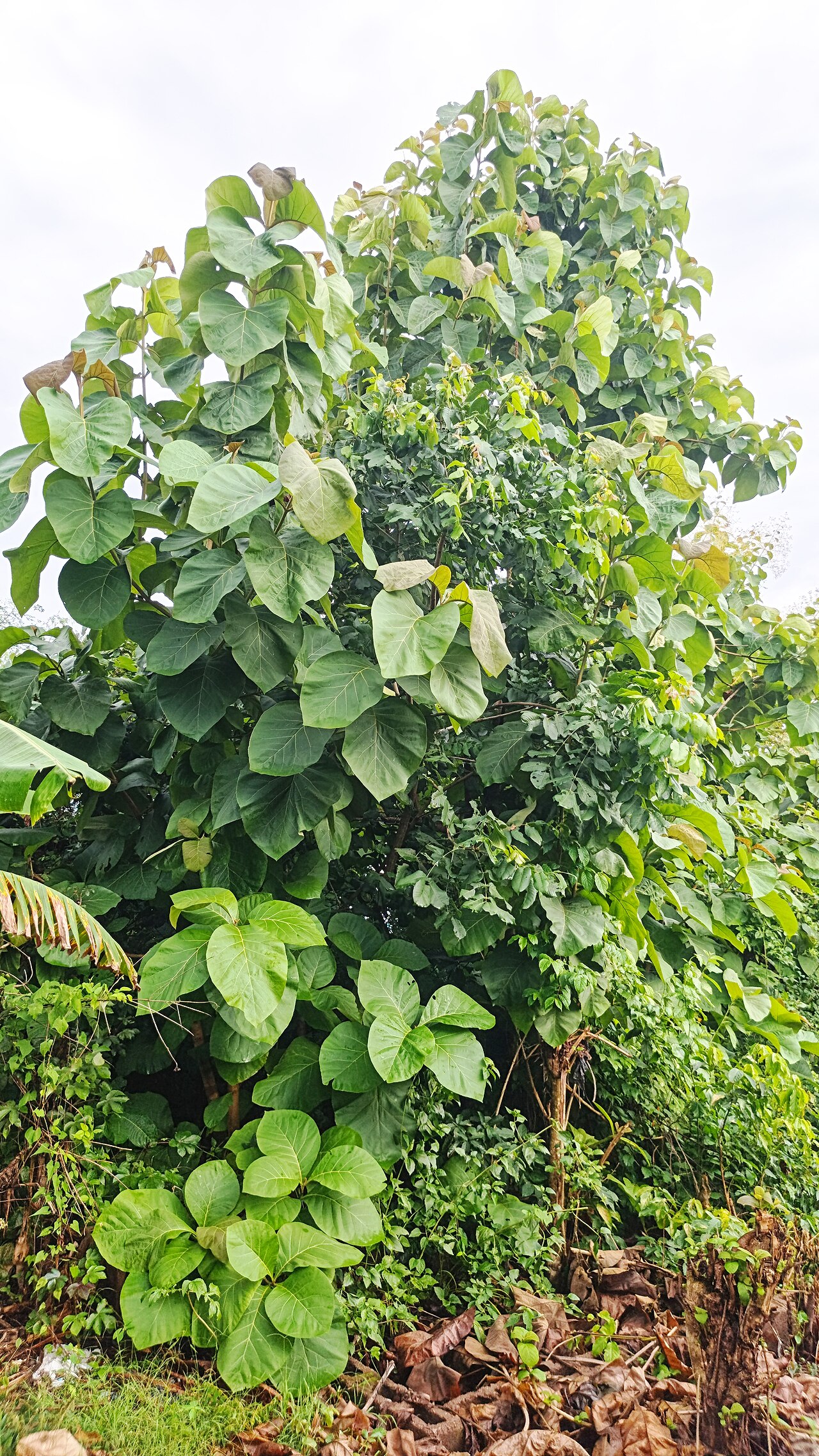
Teak
A golden-brown tropical wood, oily and naturally durable. Associated with fine furniture, outdoor furniture, and Scandinavian and mid-20th-century design.
Have a piece of furniture and you are not sure what you are looking at?
A few photographs and a short description — and we will get to know your piece. No obligation.
Send photos for a restoration assessment