Knowledge center · Woods in antique furniture · True mahogany
Wood · Swietenia macrophylla, Swietenia mahagoni, Swietenia humilis
True mahogany
A family of tropical cabinet woods in a reddish brown, with good stability and excellent carving and polishing. The trade name “mahogany” is also used for other woods, so it calls for caution.
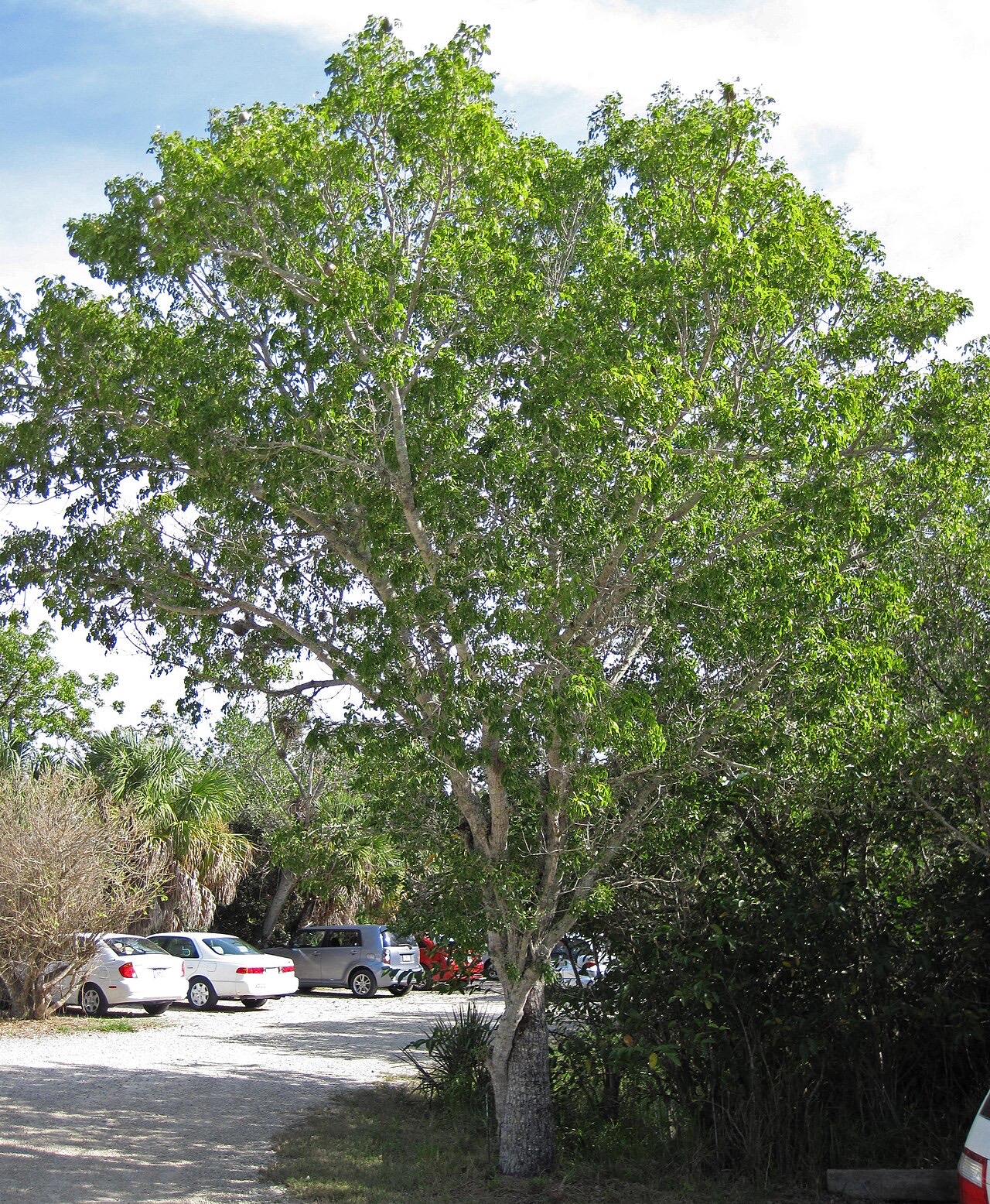


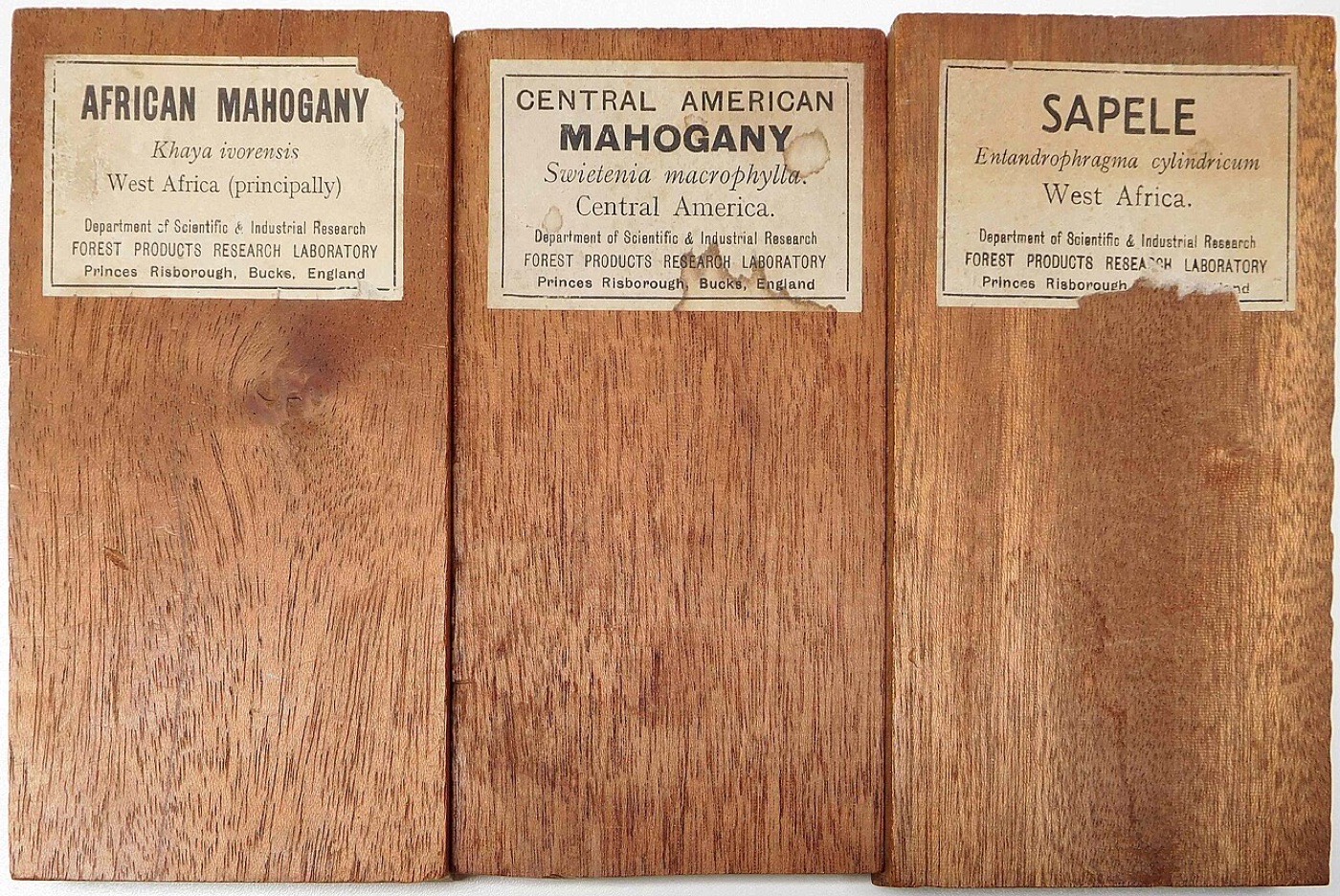

What is true mahogany? In the botanical sense it means species of the genus Swietenia. The market also has woods called “African mahogany,” sapele, or similar trade names, which are not the same genus. On an old piece, the name in a catalog or in a family story is a clue, not proof.
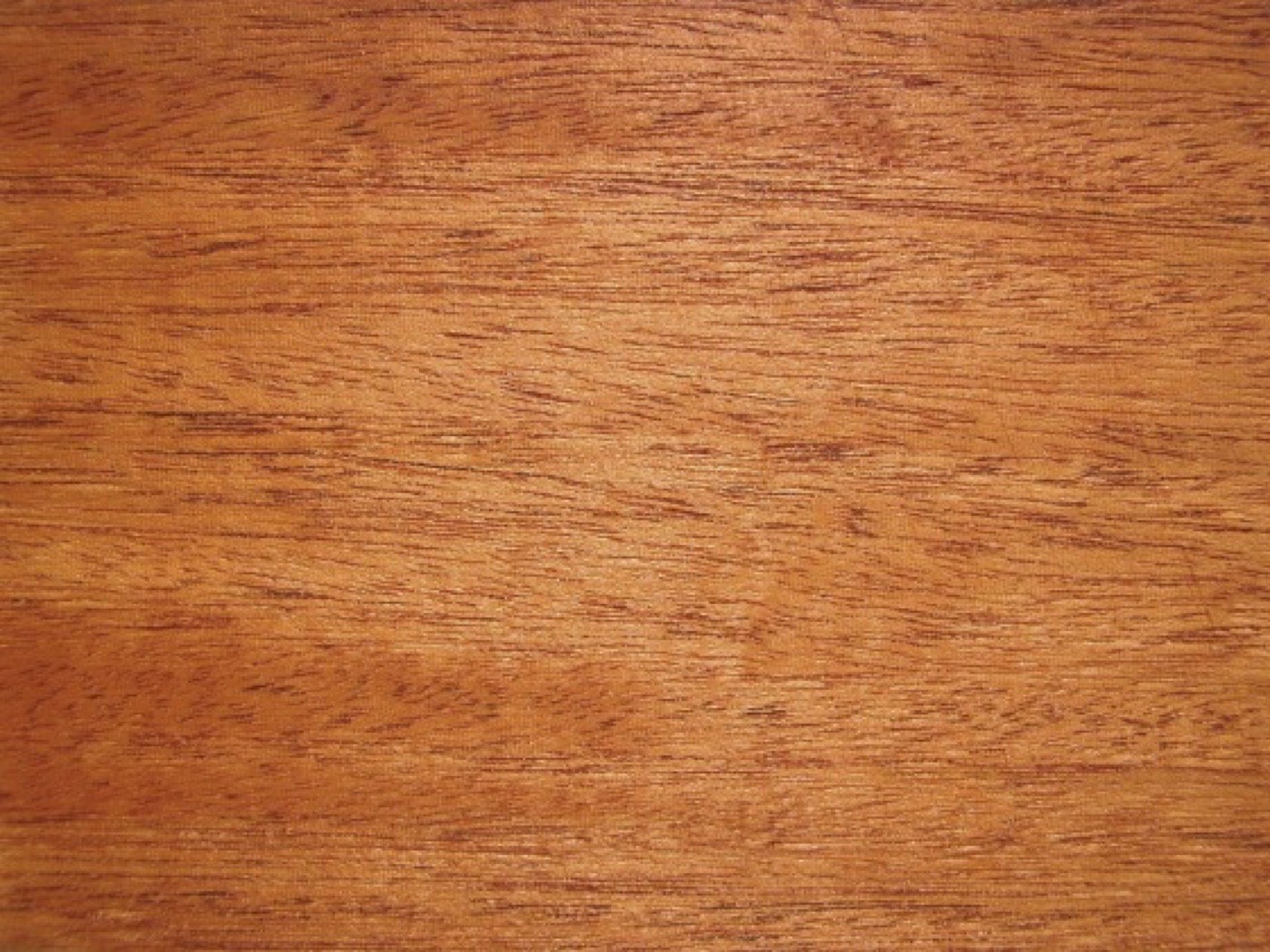
How to recognize it. The heartwood runs from a light brown to a reddish brown and deepens with age and finish. The pores are medium to large and visible to the eye, sometimes with dark deposits. The grain can be straight, wavy, or interlocked; a quarter cut can produce a ribbon figure. The veneer photographed here shows the long face, not a full anatomical section.
Working properties. Good mahogany is agreeable to work and to carve, relatively stable, and it takes a deep polish and finish. Those qualities suited wide doors, table tops, façades, and detailed carving. Interlocked grain can tear out under a plane, so the direction of the work matters.
In antique furniture. Mahogany is associated with English, European, and American furniture from the 18th century onward. It appears as solid wood and also as veneer on a ground of pine, oak, or another wood. A new part that looks too red may be stained, or it may be another species; a good match also looks at pores and grain figure.
Trade and responsibility. CITES listings depend on the species, the geographic population, and the form of the product. For example, a CITES guide notes that Swietenia macrophylla from the Neotropics is regulated under Appendix II for logs, sawn wood, veneer, and plywood. A finished piece of furniture, an antique, or material from a plantation outside the natural range is not necessarily treated the same way. Before buying, importing, or exporting, check the species, the origin, the form of the product, and the current law with the competent authority.
Historical background
Mahogany became a central material of elite Atlantic furniture in the 18th century and continued to shape furniture in the 19th. Historical felling and trade now raise questions of identification, documentation, and legal origin; in restoration, existing material should be conserved, and any replacement wood should be documented.
Related
Veneer
A thin layer of fine wood glued onto a body of plainer wood. A legitimate technique, centuries old — many grand mahogany pieces are built this way.
Patina
The layer of wear and sheen that wood gathers over the years. To collectors it is an asset, not a flaw: original patina raises value, and removing it can damage that value badly.
Reproduction
A later copy in the style of an earlier period. Not a fake — but not an antique either, and the difference in price is large.
Have a piece of furniture and you are not sure what you are looking at?
A few photographs and a short description — and we will get to know your piece. No obligation.
Send photos for a restoration assessment