Knowledge center · From the workshop — restoration stories · Structural repair of a carved armchair
Restoration story
Structural repair of a carved armchair
When the joints have weakened, upholstery is not the first answer. The armchair was held in many clamps so the parts of the frame could be brought back into place and the skeleton stabilized before the work continued.
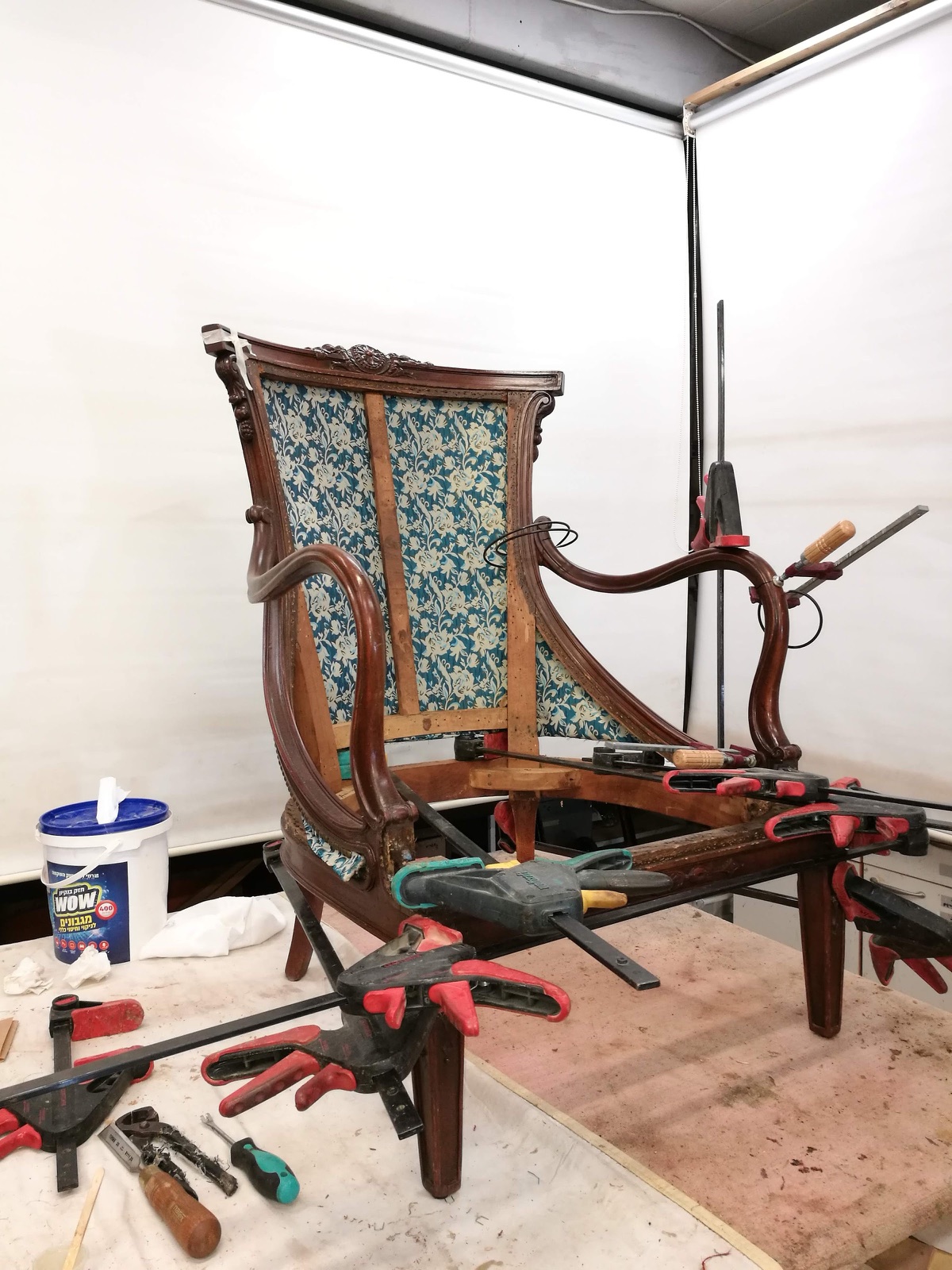
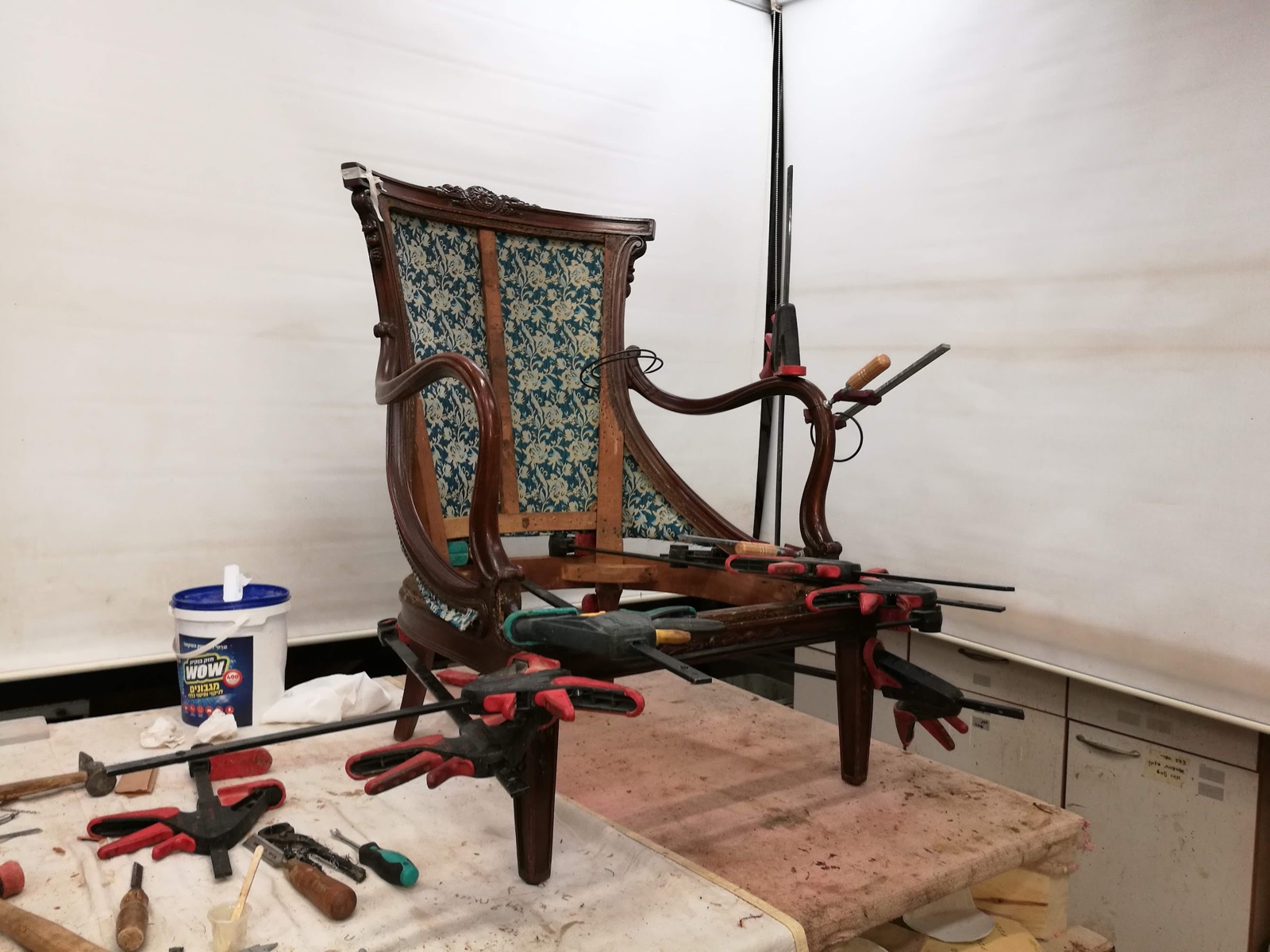
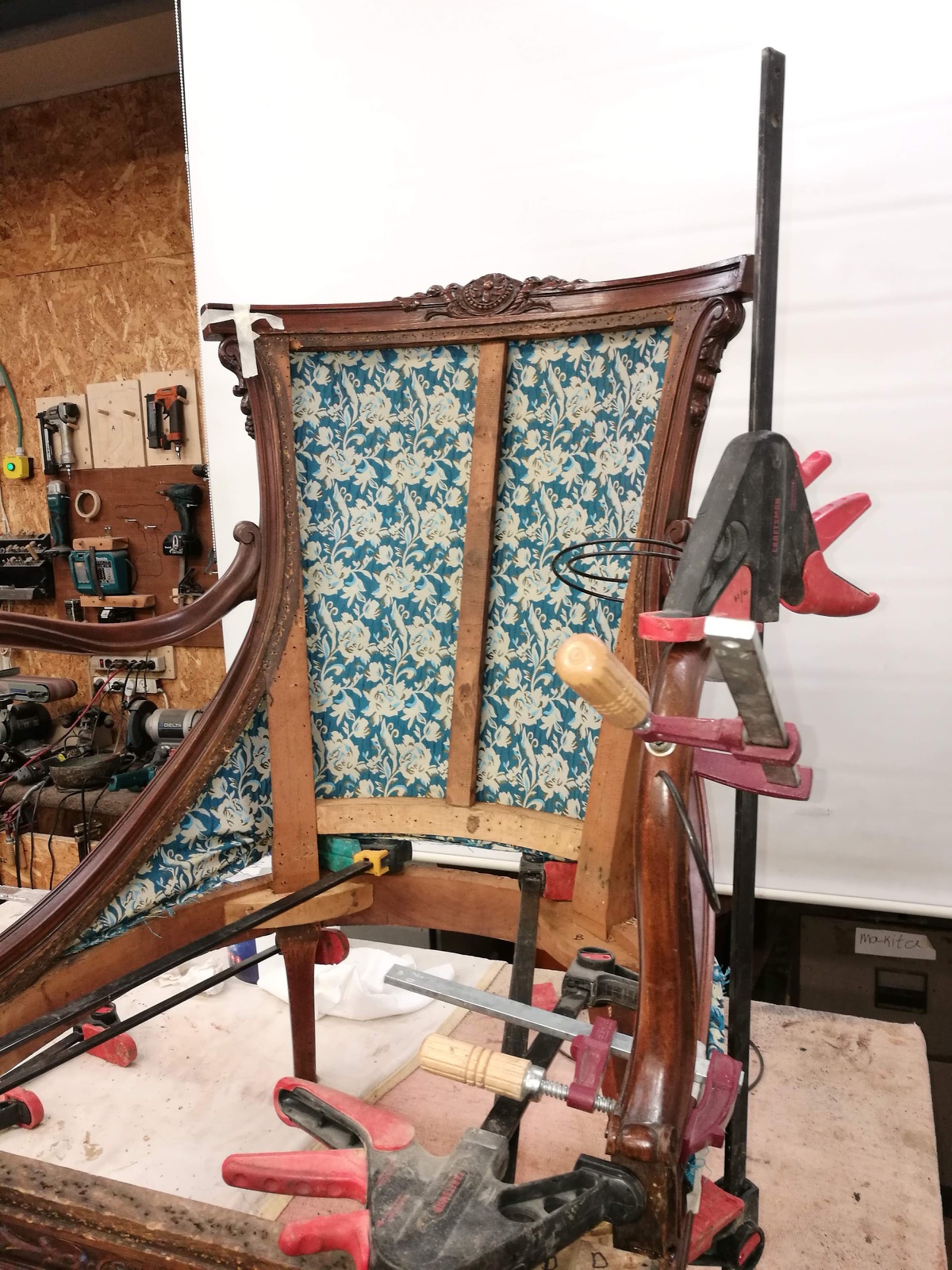
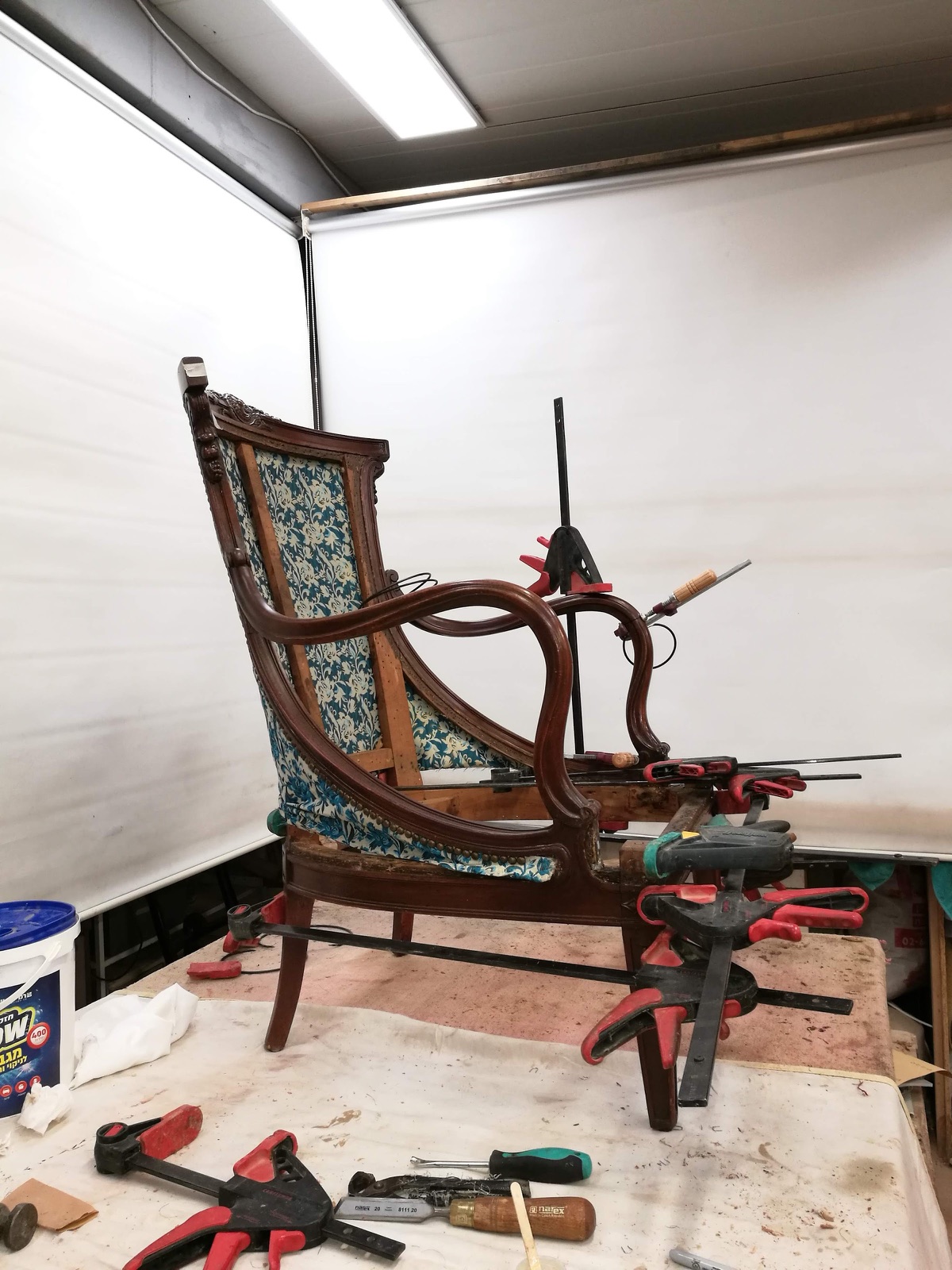
On a carved armchair every joint is part of the structure and part of the form. When the frame opens or goes out of line, the work has to happen at several points at once, so the carving and the curves return to place without distortion.
The clamps apply controlled pressure while the joints set. The number of clamps is not the point; the position and direction of each one decide whether the frame comes back straight and stable.
Only after the structural repair is finished is it safe to go on to the seat and the upholstery. That is why the frame is always diagnosed before a cloth is chosen.
Related
Loose joints in chairs and tables
A wobbling chair is the most common failure. Do not fill the joint with epoxy or nails — that makes a future repair impossible. The right repair is to take the joint apart, clean out the old glue (usually reversible hide glue), and glue it again with a suitable woodworking glue. If the chair is in daily use, stop using it until it is repaired, so the break does not spread.
Mortise and tenon
A traditional joint in which a tongue fits into a socket. A clear sign of sound construction — this is how furniture was built before the age of screws.
Have a piece of furniture and you are not sure what you are looking at?
A few photographs and a short description — and we will get to know your piece. No obligation.
Send photos for a restoration assessment