Knowledge center · Woods in antique furniture · American black walnut
Wood · Juglans nigra
American black walnut
A dark, even chocolate-brown wood, medium-hard and stable — the classic American cabinet wood, and the wood of mid-century modern furniture.
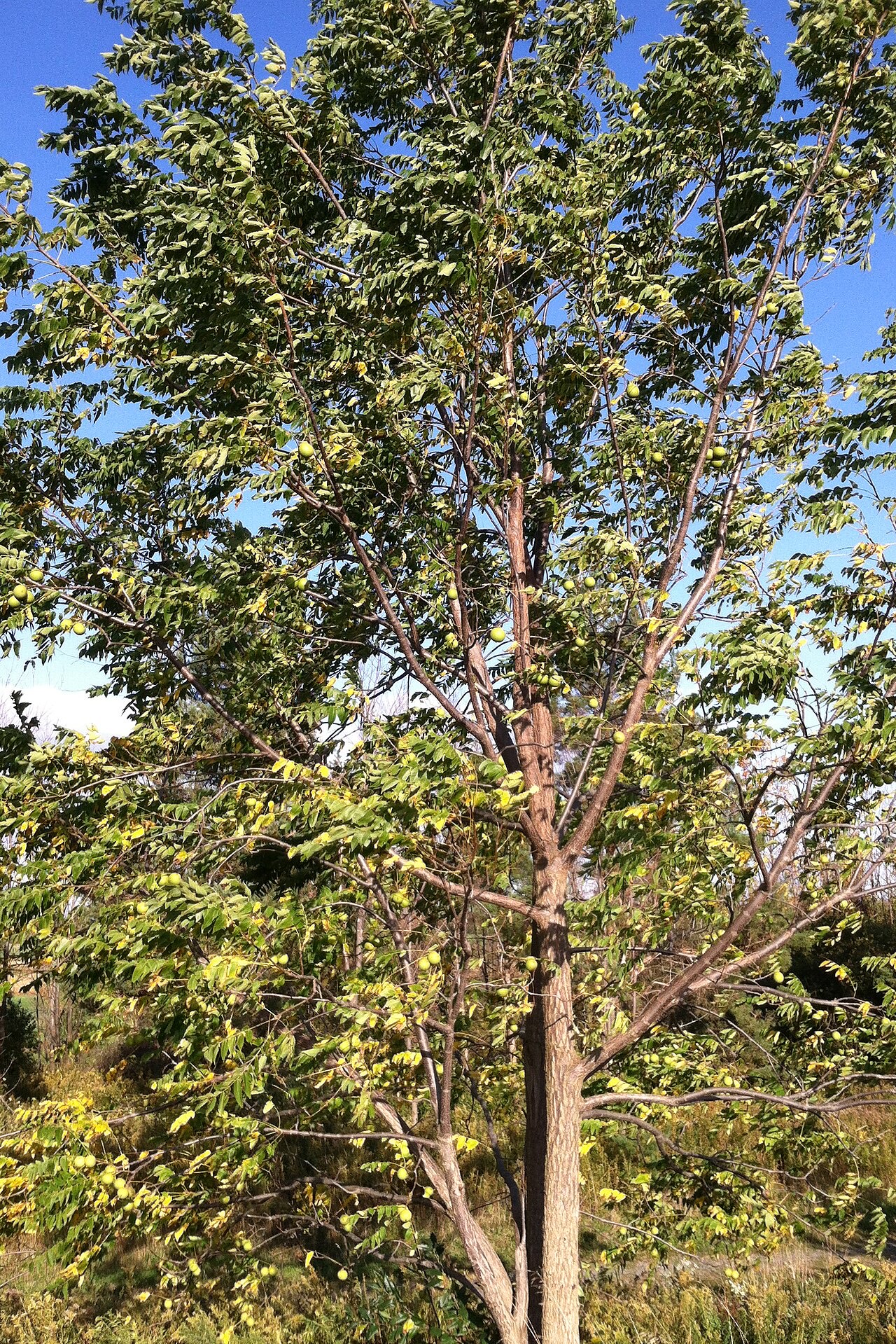

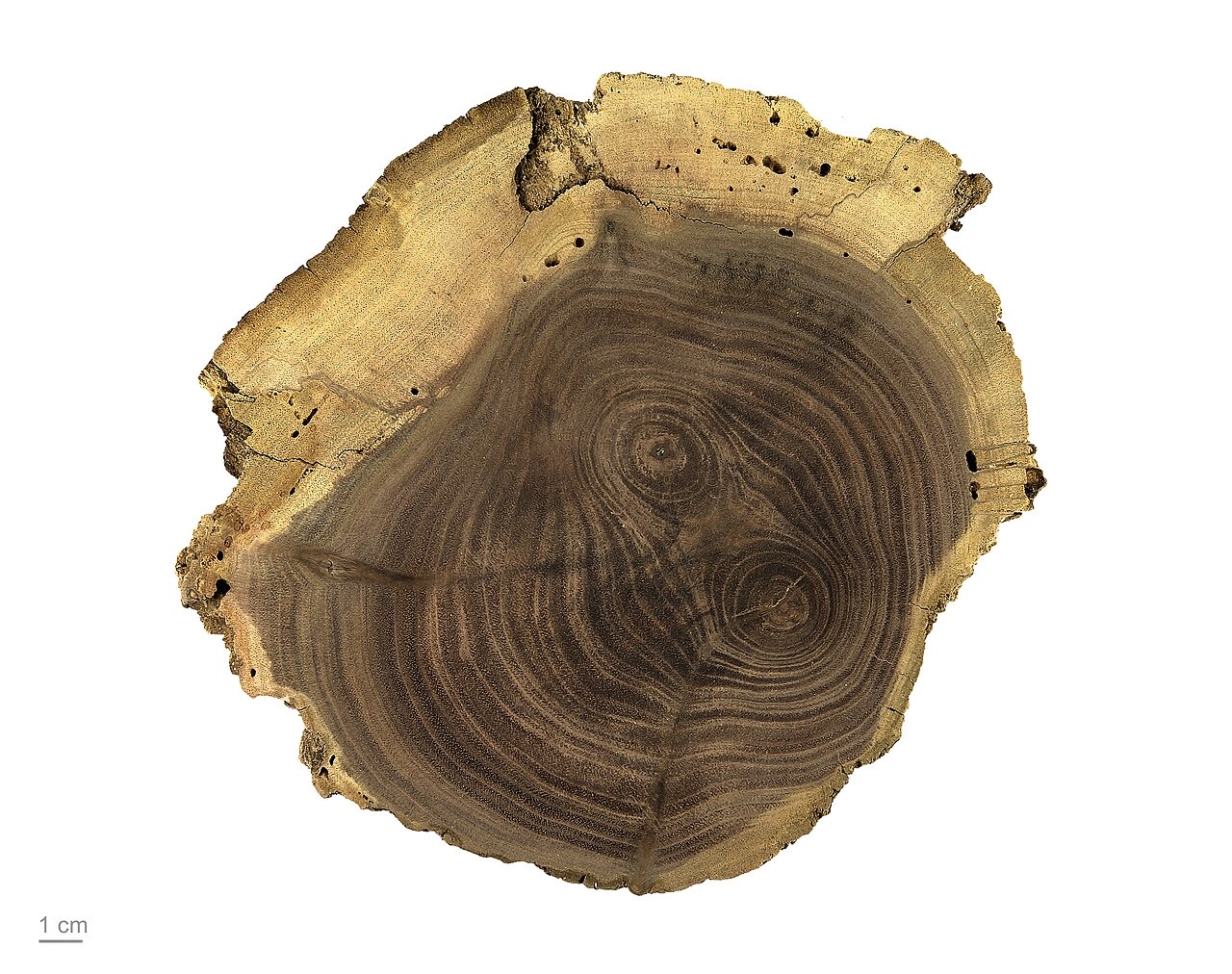

Black walnut (Juglans nigra) is the American relative of European walnut, and it is darker and more even. In furniture in Israel it appears mainly in pieces imported from America and in designer furniture of the 1950s–70s (mid-century modern), and also in Danish furniture of that period, which favored it alongside teak.
Identification. Heartwood from dark brown to purplish black, with very pale sapwood (sometimes steamed in the trade to even the color). Straight, medium texture, with diffuse pores. Unlike European walnut, it has fewer streaks and a more uniform color.
Working and restoration. Pleasant to work, it polishes to a luster and is reasonably stable in dimension. It lightens in exposure to light — a mid-century piece that stood by a window for 50 years is noticeably paler than its shaded side, and a restoration has to balance the color between the parts rather than “darken” everything. The typical finish of the period is an oil or Danish oil, not a thick varnish, and a correct restoration keeps that.
How to tell it from European walnut. The European wood is lighter, with dark streaks on a gray-brown ground and sometimes burr “eyes”; black walnut is even and dark, and a cut end shows slightly larger pores. Furniture of the 1950s–70s sold in Israel as “walnut” is, in most cases, black walnut, or black walnut veneer on a panel core. The simple workshop check: a hidden place (the underside of a shelf, the inside of a drawer) that has not seen the light — that is where the original color shows.
Historical background
The premier cabinet wood of the American colonies in the 17th and 18th centuries (before mahogany took over), and later of the American furniture industry. Its great revival came in Scandinavian-American design of the mid-20th century (George Nakashima, Hans Wegner, and others), where it is almost a signature of the period.
Related
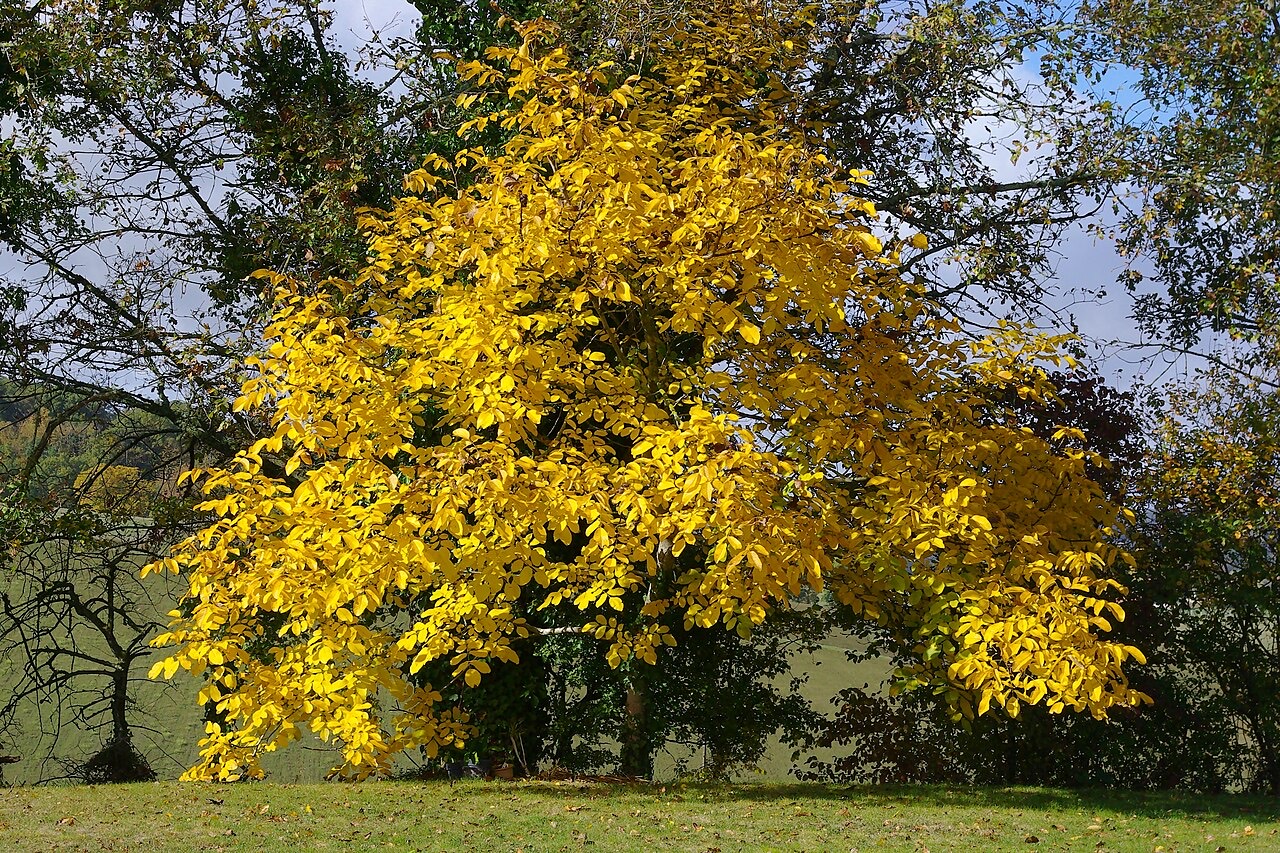
European walnut
A classic cabinet wood in varying browns, with a fine grain and wavy or curly figure. Walnut appears as solid wood, as veneer, and in marquetry.
Veneering
Gluing a thin layer of precious wood (veneer) onto a cheaper or more stable ground — it gives the look of an exotic wood at a lower cost, and often more structural stability than solid wood.
French polish
An old finishing technique that uses shellac dissolved in alcohol, laid on in many very thin coats with a cloth pad, to build the deep, “wet” gloss associated with antique furniture.
Identifying your wood
Antique furniture in Israel is often oak, walnut, mahogany, beech, or a wood faced with veneer. A hardwood (oak, walnut) is more durable and takes restoration well; a softwood and veneer need a lighter hand. A quick sign: heavy weight and tight grain point to a hardwood. Do not sand hard before you know what it is — thin veneer can be sanded away entirely.
Solid wood
A part made entirely of the same wood, with no facing. Not necessarily “better” than veneer — but you need to know which one is in front of you.
Have a piece of furniture and you are not sure what you are looking at?
A few photographs and a short description — and we will get to know your piece. No obligation.
Send photos for a restoration assessment