Knowledge center · Woods in antique furniture · American black cherry
Wood · Prunus serotina
American black cherry
A fine furniture wood that begins pinkish brown and darkens with light and time. Valued for its smooth surface, calm grain, and warm luster.
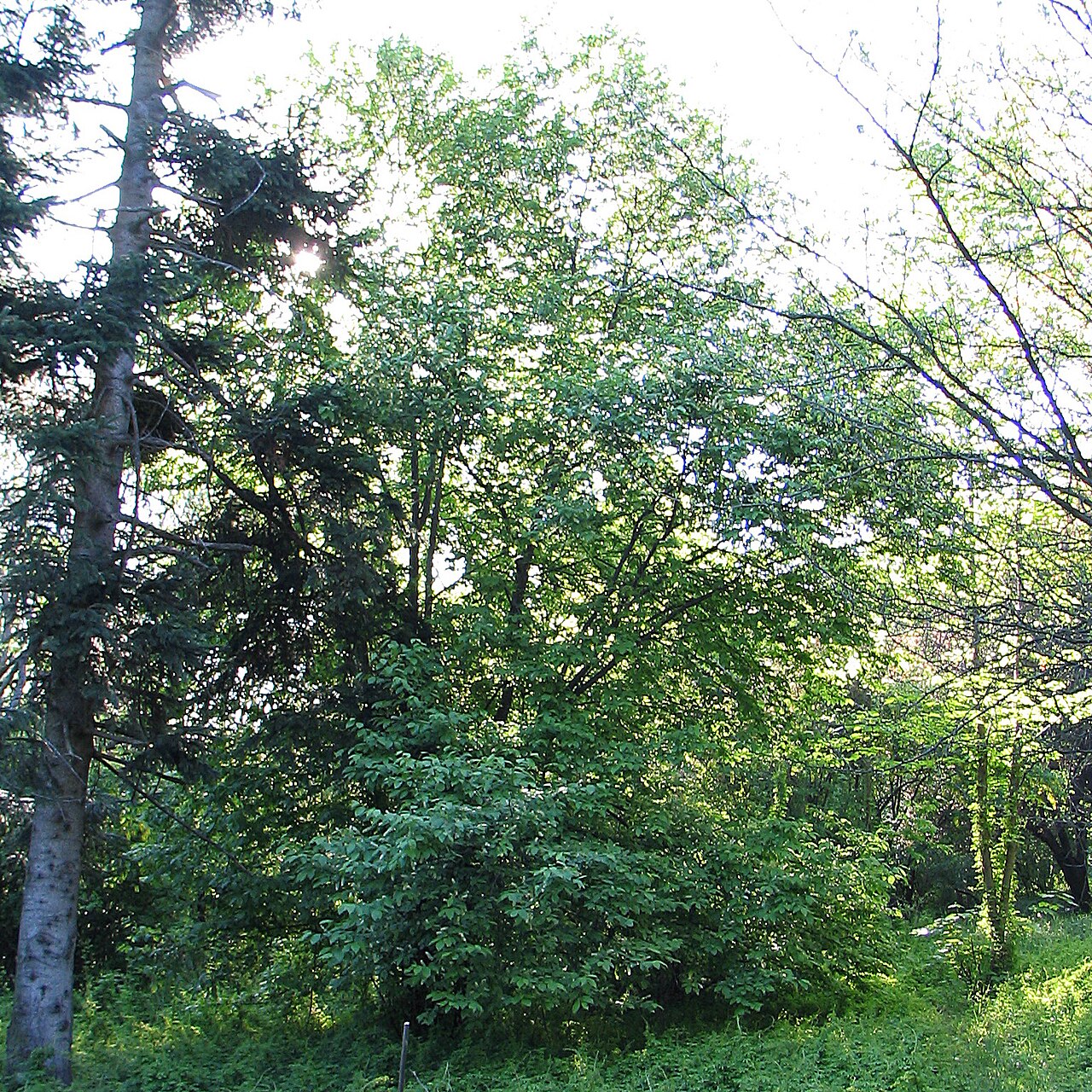

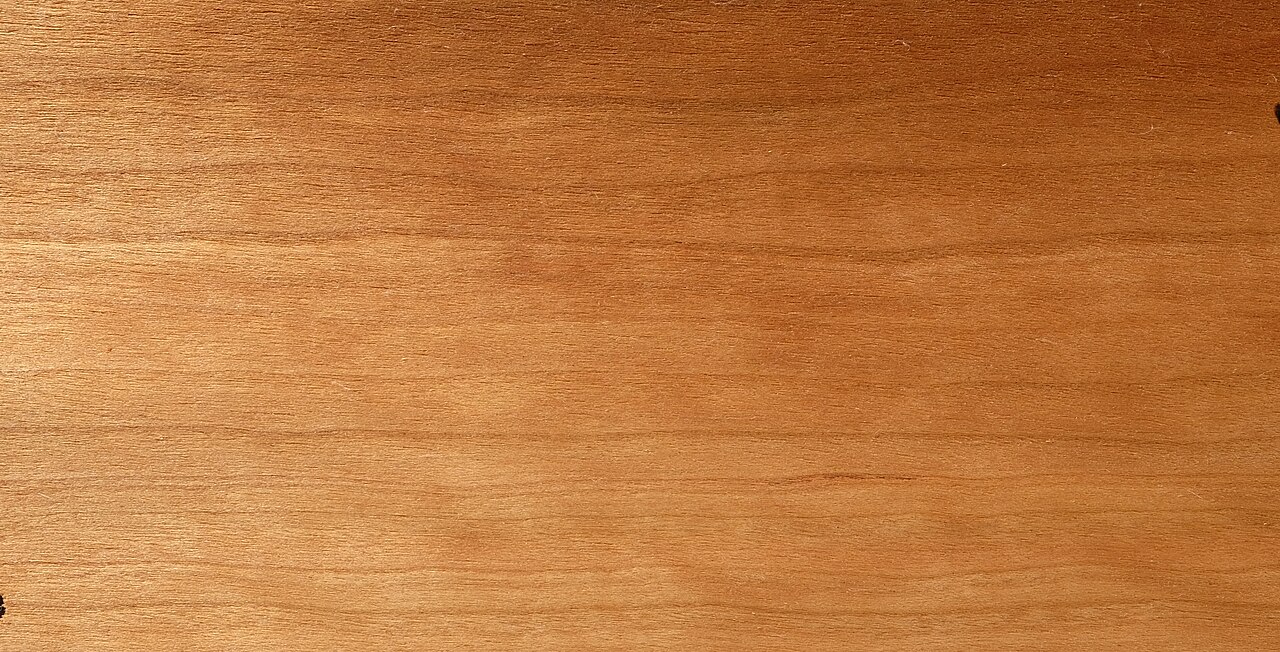

How to recognize it. Black cherry usually shows a fine texture and small pores. Fresh heartwood is pinkish or reddish brown and darkens gradually to a warm, deep tone in the light. The sapwood is pale and sometimes makes a sharp contrast.
Grain and marks. The grain is usually straight, but it can be wavy. Small gum pockets or narrow dark lines sometimes appear; they are a natural feature, not necessarily damage. The surface takes a smooth polish and a quiet luster.
Working properties. It is a wood of medium weight, relatively stable, and agreeable to work, carve, and glue. It suits fine detail and smooth surfaces. The relatively quick change of color calls for care when matching a new repair to an old piece: a new part may look pale at first and deepen later.
In antique furniture. Black cherry is common in American furniture — tables, chests, cabinets, and chairs — and was sometimes a local alternative to mahogany. Knife-cut cherry veneer shows a clean, even sequence, and the color can be enriched with oil, wax, or varnish.
Identification caution. A finish in a “cherry” tone does not mean the wood itself is cherry. Beech, birch, and maple were sometimes colored in a similar tone. Check an exposed cut, the pores, the back of a panel, and interior parts before you decide.
Historical background
Black cherry was an important local furniture wood in North America. It suited both utilitarian pieces and refined cabinetwork, and its deepening color sometimes gave it the look of more expensive tropical woods.
Related
Veneer
A thin layer of fine wood glued onto a body of plainer wood. A legitimate technique, centuries old — many grand mahogany pieces are built this way.
Patina
The layer of wear and sheen that wood gathers over the years. To collectors it is an asset, not a flaw: original patina raises value, and removing it can damage that value badly.
Have a piece of furniture and you are not sure what you are looking at?
A few photographs and a short description — and we will get to know your piece. No obligation.
Send photos for a restoration assessment