Knowledge center · Woods in antique furniture · Olive
Wood · Olea europaea
Olive
A hard, dense, oily wood with twisted grain and dramatic dark-brown streaks — the most local wood in Israel, and in furniture used for veneer, small objects, and special pieces, not for mass production.
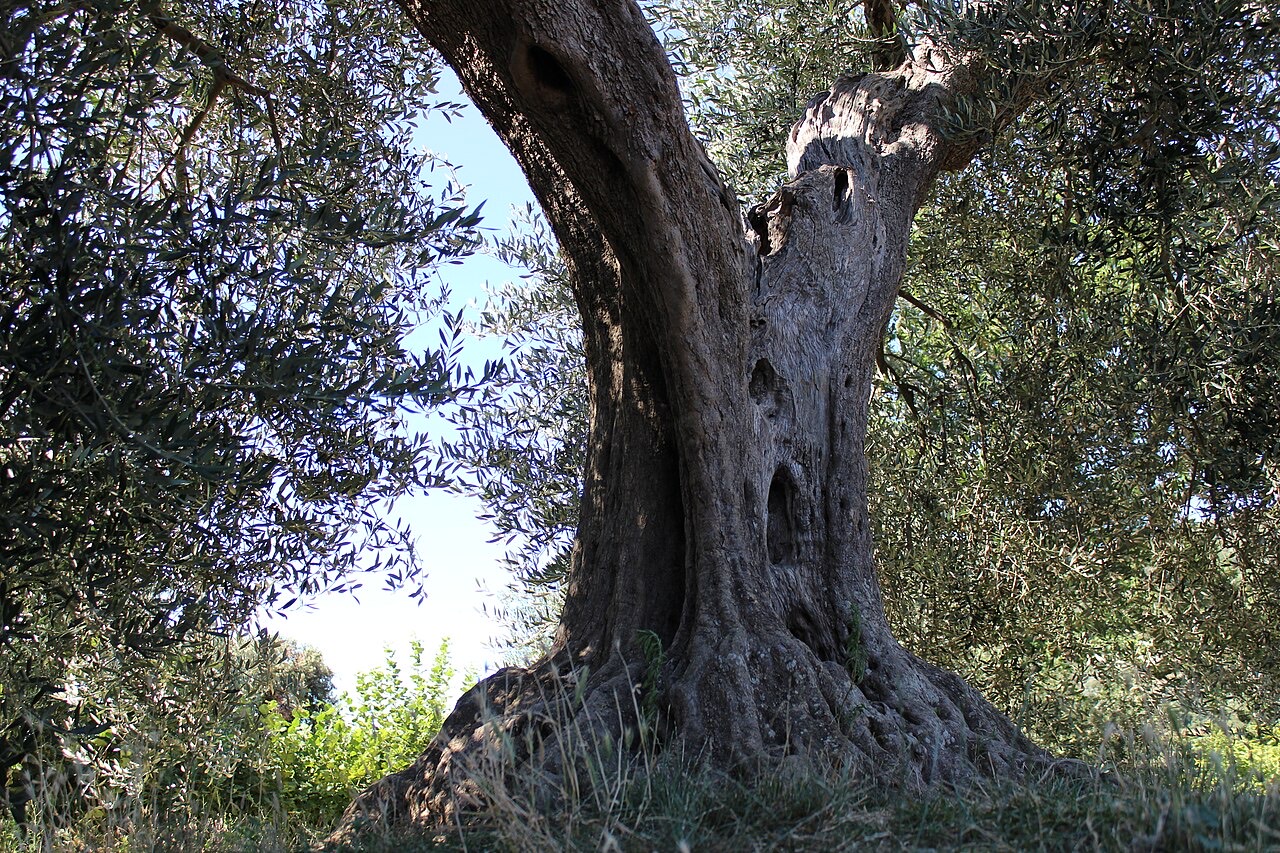

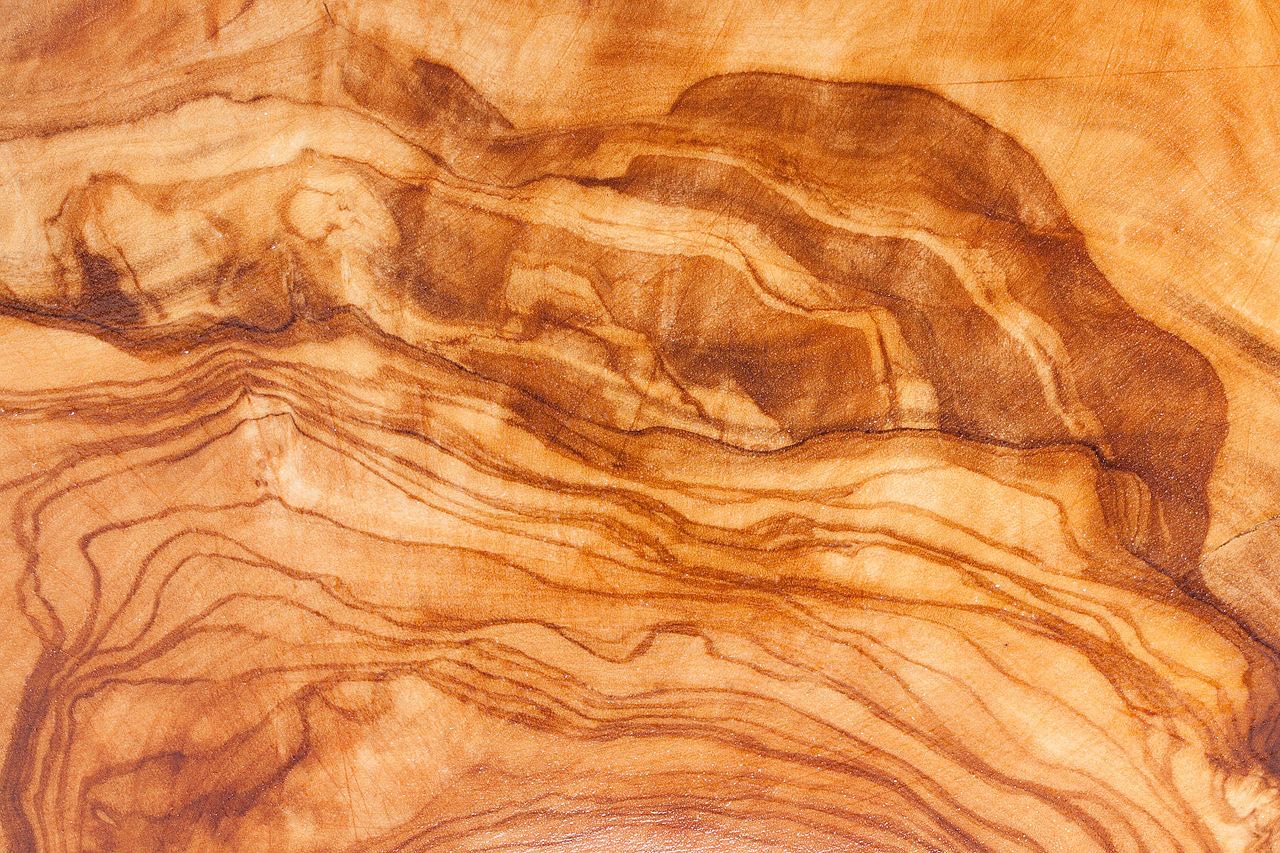

Olive is the most “ours” of woods — ancient olive trees grow throughout the country — but in furniture it is relatively rare: the trunk is twisted, sometimes hollow, and you cannot saw long, straight boards from it. It therefore appears mainly as veneer, in turned objects, in small tops, and in pieces by local makers and cabinetmakers.
Identification. A ground from yellow-cream to honey brown, with dark-brown to black streaks in a twisted, unpredictable figure; a very fine, even texture; a polished surface that looks almost waxy. Heavy for its size, with a light, sweet smell when it is worked.
Working and restoration. It turns and polishes beautifully, but it is hard to dry — olive boards tend to check and distort as they dry, so the wood needs to have been seasoned for years before use. The preferred finish is oil (the natural oiliness takes to it), not a thick varnish. When restoring a piece with olive veneer, the twisted grain makes every repair a careful match of figure, not only of color.
In the workshop. The olive furniture that reaches us is usually tables and side tables by local makers from recent decades, or tops from live-edge slabs. The recurring problems are drying checks that open over the years, and a surface that has dried out and lost its luster. The right treatment is not to sand everything and paint it — it is to stabilize the check (a tinted resin fill, or a wooden butterfly) and to feed it with lime oil or tung oil in thin coats. Olive that has been given a thick varnish looks “plastic” and loses the depth of the streaks; if a piece arrives that way, it is sometimes better to remove the varnish and return to oil.
Historical background
The olive has accompanied this country for thousands of years — mainly for the fruit and the oil, while the wood itself was used for lamps, vessels, and building details. In European furniture it is rare: olive veneer appears in Italian and Spanish pieces, and in late-17th-century England it was used for oyster veneering — branches sliced into shell-like rounds. In 20th-century Israel it is the wood of souvenirs and of local woodcraft, and in recent years it has returned in designer furniture.
Related
Veneering
Gluing a thin layer of precious wood (veneer) onto a cheaper or more stable ground — it gives the look of an exotic wood at a lower cost, and often more structural stability than solid wood.
Carving
Shaping wood in three dimensions with chisels and a mallet, removing material gradually — used for ornament on legs, frames, and decorative details of period furniture.
Humidity and temperature — the quiet enemy
Antique wood “breathes” and responds to changes in humidity. The Israeli climate poses a double risk: a dry summer that shrinks and splits, and a damp winter that swells drawers and joints. Keep relative humidity at 45%–55%, keep furniture out of a direct air-conditioner blast and away from a window in strong sun, and avoid placing it against a damp exterior wall.
Cleaning an antique finish properly
Do not use household cleaners or commercial furniture spray — silicone and solvents damage shellac and an original finish. Dust with a dry microfiber cloth, and only occasionally with a cloth that is barely damp. To refresh the sheen: a thin coat of natural wax (beeswax or carnauba) once or twice a year, in gentle circles.
Veneer
A thin layer of fine wood glued onto a body of plainer wood. A legitimate technique, centuries old — many grand mahogany pieces are built this way.
Have a piece of furniture and you are not sure what you are looking at?
A few photographs and a short description — and we will get to know your piece. No obligation.
Send photos for a restoration assessment