Knowledge center · Woods in antique furniture · Teak
Wood · Tectona grandis
Teak
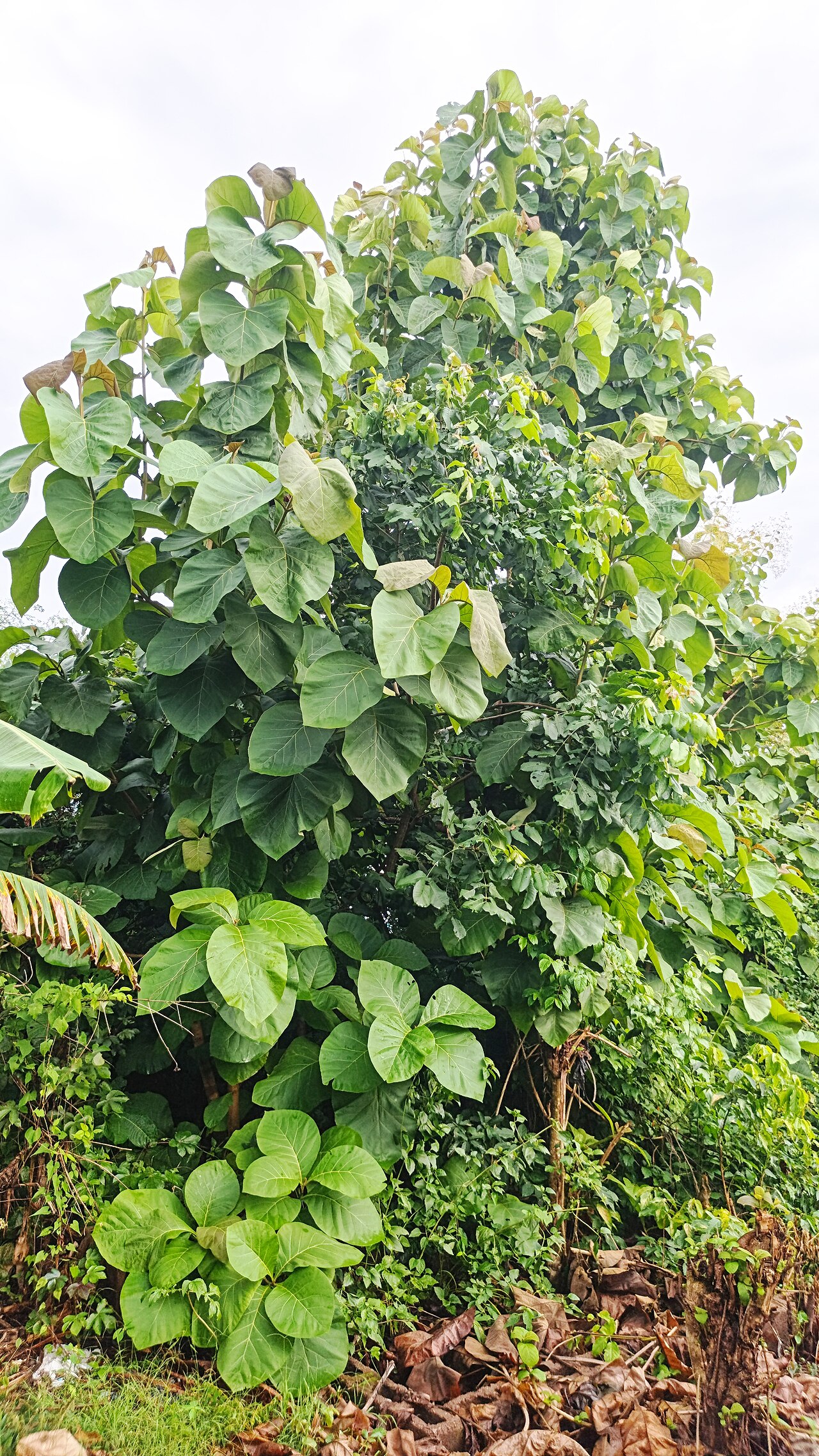
A golden-brown tropical wood, oily and naturally durable. Associated with fine furniture, outdoor furniture, and Scandinavian and mid-20th-century design.
.jpg)
_-_teck_-_Famille_des_Lamiac%C3%A9es_(Birmanie)_-_btv1b10113558t.jpg)
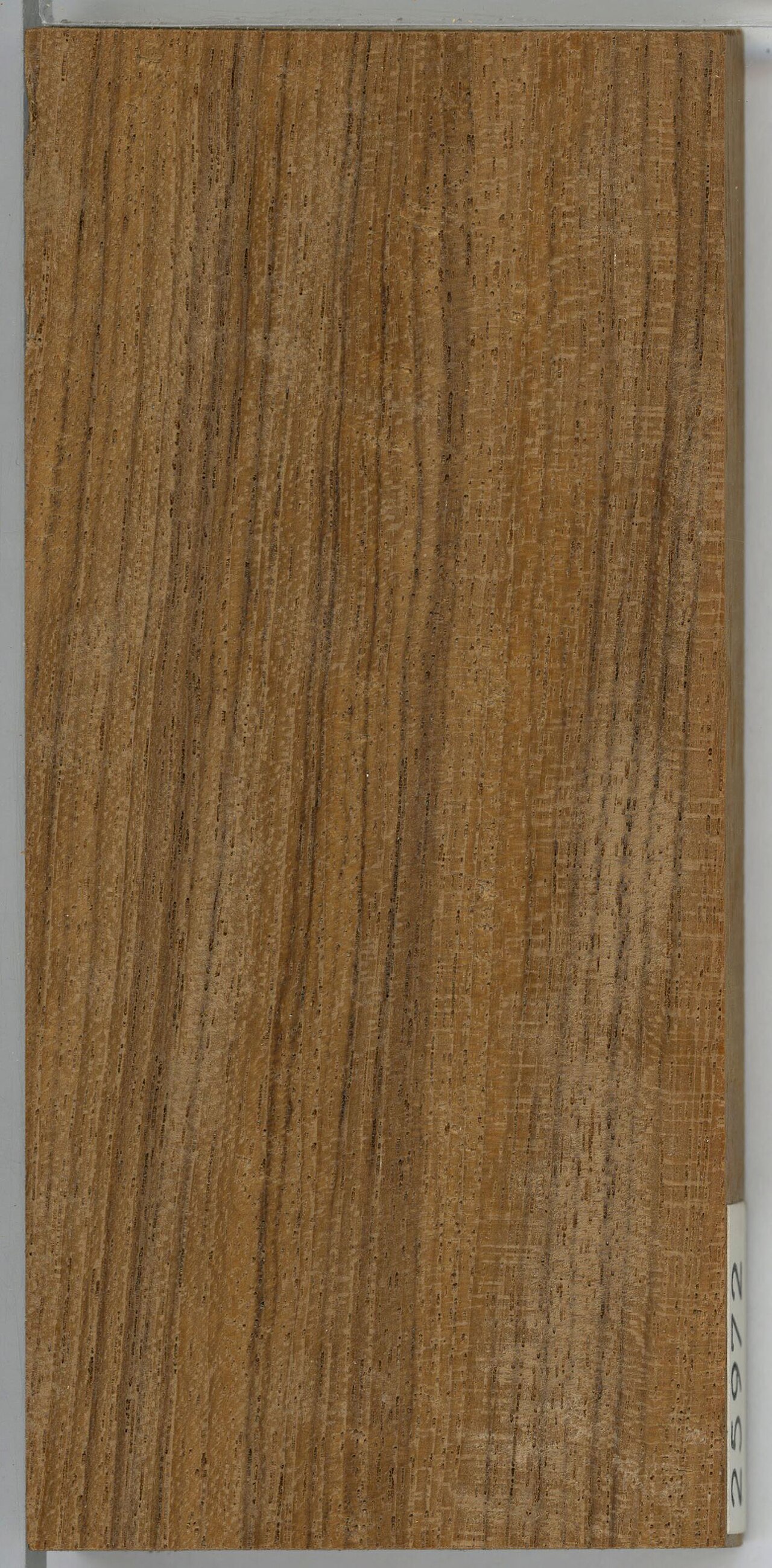
How to recognize it. Teak heartwood runs from golden yellow to a medium brown and sometimes includes dark streaks. The pores are visible, and the texture is medium to coarse. The surface can feel slightly oily and give off a characteristic scent when fresh wood is exposed.
Section and grain. The grain is usually straight but can be wavy or interlocked. On a cross-section the vessels are relatively large and the ring transition is not always sharp. The sample photographed here comes from an identified wood collection and shows both end grain and the long face.
Working properties. The natural oils and extractives in teak give it good resistance to moisture and decay, but they can interfere with gluing and finishing if the surface is not prepared properly. Minerals in the wood can dull cutting tools. It is relatively stable and suits precise joints and surfaces that take use.
In furniture. Teak is especially common in Danish and Scandinavian furniture, in mid-20th-century modern furniture, in garden furniture, and in marine work. In many pieces it appears as teak veneer on a panel or on another wood, with solid-wood edges. Check the edge of the panel and the underside of the top before sanding.
Identification and care. Other woods have been sold under names that recall teak. In addition, commercial “teak oil” is the name of a finish and is not proof that the furniture is teak. Strong cleaning or sanding can change the color and the face of the veneer quickly.
Historical background
Alongside a long traditional use in South and Southeast Asia, teak became a hallmark of fine modern furniture in the 20th century. Today it matters to distinguish old material already in a piece from the purchase of new timber, and to document the origin of any new wood.
Related
Veneer
A thin layer of fine wood glued onto a body of plainer wood. A legitimate technique, centuries old — many grand mahogany pieces are built this way.
Solid wood
A part made entirely of the same wood, with no facing. Not necessarily “better” than veneer — but you need to know which one is in front of you.
Have a piece of furniture and you are not sure what you are looking at?
A few photographs and a short description — and we will get to know your piece. No obligation.
Send photos for a restoration assessment